



























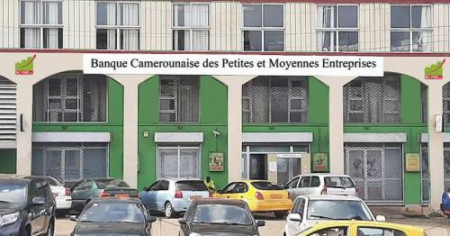
Cameroon’s Small and Medium Enterprises Bank (BC-PME) may soon receive a significant boost to its equity. Meeting in a multi-year and mixed general assembly on February 26, 2026 in Yaoundé, the institution approved a CFA40 billion capital increase, pending authorization from the Central African Banking Commission (Cobac).
If the operation receives the regulator’s approval, the public bank’s share capital will rise from CFA20 billion to CFA60 billion. The increase will be carried out through the issuance of four million new shares with a nominal value of CFA10,000 each, fully subscribed by the Cameroonian state, which remains the bank’s sole shareholder.
Funds from the import-substitution program
The resources for the recapitalization will come from the Integrated Agropastoral and Fisheries Import Substitution Plan, a public program designed to strengthen domestic production in agriculture, livestock, and fisheries. The funds transferred to BC-PME are intended to finance private economic operators active in these sectors.
The operation also comes as banks in the Central African Economic and Monetary Community (CEMAC) adjust to new Cobac regulations requiring a minimum share capital of CFA25 billion for credit institutions in the region. Several banks have already moved to comply with the rule, including Afriland First Bank, which increased its capital to CFA50 billion, BICEC with CFA49 billion, CCA-Bank with CFA29.4 billion, and BGFIBank Cameroon, which also raised its capital to CFA50 billion.
A struggling bank despite its SME mandate
The recapitalization takes place in a challenging context for BC-PME. Launched in 2015 to improve access to finance for small and medium-sized enterprises, the public bank has struggled for several years to achieve financial stability.
According to the 2024 Statistical Yearbook on SMEs, the Social Economy, and Crafts, the bank granted only CFA1.95 billion in loans to 85 project promoters, a modest level considering its mandate to support the entrepreneurial sector.
Recent performance figures confirm these difficulties. In 2023, the bank recorded a deficit of CFA1.112 billion. In this context, the injection of new public funds appears aimed at restoring financial flexibility and strengthening the institution’s capacity to finance SMEs, which remain at the core of its mission.
Governance turbulence and strategic repositioning
The bank’s financial difficulties have also been accompanied by management turbulence. In October 2023, the board of directors appointed Amadou Haman, previously deputy managing director, as acting chief executive.
The decision followed sanctions imposed by Cobac against the former chief executive, Agnès Ndoumbe Mandeng. After a disciplinary procedure opened in 2023, the regulator withdrew her banking license and imposed a ten-year ban from working in credit institutions across the CEMAC region.
Beyond the recapitalization, the February 26, 2026 general assembly also approved the bank’s strategic development plan for 2025–2030. The plan outlines a repositioning around its core mandate of financing SMEs, with a particular focus on projects linked to the government’s import-substitution program.
Amina Malloum
