








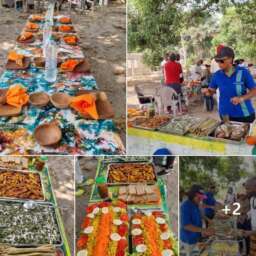


















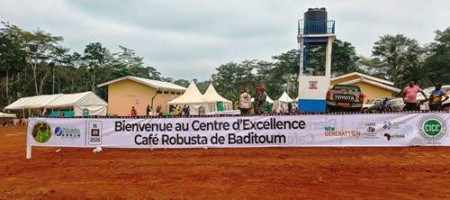
The Conseil interprofessionnel du cacao et du café (CICC) on March 24, 2026 inaugurated Cameroon’s first robusta coffee post-harvest processing center in Baditoum, in the country’s East region. Equipped with a fermentation room and drying areas, the facility is designed to use specialized processing techniques to produce high-quality coffee beans.
“This excellence center marks the beginning of specialty coffee production in Cameroon,” said Akanksa Gupta, an expert from the Specialty Coffee Association, who traveled to Baditoum for the inauguration. “The more we focus on quality, the easier it becomes to access niche markets, where coffee can be sold at better prices for producers,” said Anselme Gouthon, president of the Association des cafés robusta d’Afrique et de Madagascar (Acram), who welcomed the initiative.
With this push to improve the quality of robusta coffee, the CICC aims to replicate a model that has already delivered results in the cocoa sector. The construction of post-harvest cocoa centers across many of Cameroon’s growing regions has helped farmers increase their earnings by partnering with the Confédération des chocolatiers et confiseurs de France, whose members buy beans directly from cooperatives at prices set at the start of each season.
These facilities have also boosted the international profile of Cameroonian cocoa. On Feb. 20, 2026, in Amsterdam, Cameroon won the gold medal in the Africa and Indian Ocean category at the 10th edition of the Cocoa of Excellence Awards, held alongside the Cocoa Trade Fair.
In June 2023, Cameroon was admitted alongside Ghana into the group of “fine cocoa” producers — a category previously limited to South American countries, Commerce Minister Luc Magloire Mbarga Atangana said.
This momentum, which has put Cameroonian cocoa in the international spotlight, is now extending to the coffee sector through the post-harvest center in Baditoum.
BRM
