




























• (Business in Cameroon) – Cameroon and KHPC signed a framework agreement to protect communities affected by the 500 MW Kikot hydropower project.
• The dam, estimated at CFA655 billion, will be the largest in Cameroon and is backed by the World Bank and EDF.
• Construction is expected to start this year, with commissioning scheduled for 2030.
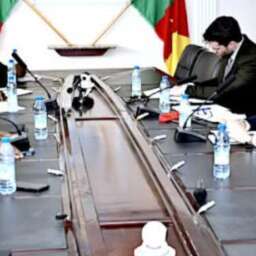
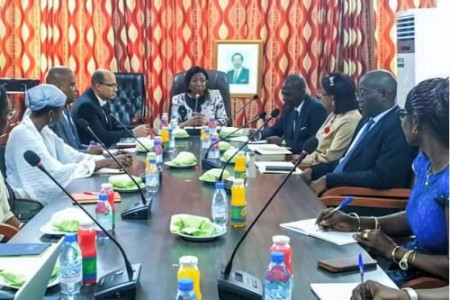
Cameroon and the Kikot-Mbebe Hydro Power Company (KHPC) advanced the 500 MW Kikot hydropower project on the Sanaga River by signing a framework agreement on September 26 in Yaoundé. Minister of Social Affairs Pauline Irène Nguene and KHPC Managing Director Christophe Avognon signed the deal, which focuses on social compliance monitoring and community support.
Nguene said: “This support is essential to ensure effective management of social and human risks linked to the project.”
Agreement to Support Local Communities
The accord sets up a mechanism for the Ministry of Social Affairs to identify, implement, monitor, and evaluate KHPC’s social initiatives. Authorities expect the system to strengthen community resilience and link local populations to the project’s economic benefits.
Avognon said: “We want to build an energy project that goes beyond electricity production and also drives development for communities.”
One of Cameroon’s Largest Hydropower Projects
KHPC announced in May it had received around 30 bids from companies seeking construction contracts. The project, valued at more than CFA655 billion, will be among the country’s largest hydropower plants. Tenders are underway, with construction slated to begin this year and delivery set for 2030.
The World Bank and other international partners will provide financing, signaling strong confidence in the project’s viability and economic impact.
Technical Details and EDF Partnership
KHPC is jointly owned by Électricité de France (EDF) and the Cameroonian state, each holding 50%. The project will include a 1,200-meter dam and a hydropower plant with six Kaplan turbines of 83.3 MW each. The 35-meter head is expected to generate stable output to meet rising national demand.
EDF said the dam will be Cameroon’s largest renewable energy facility, surpassing the 420 MW Nachtigal project.
Strategic Role in Energy and Development
Officials see Kikot as a cornerstone of Cameroon’s strategy to expand power supply, boost industrialization, and improve household access to electricity. The project also highlights the challenge of balancing development with social justice.
If the timeline holds, Kikot will begin supplying electricity in 2030, strengthening Cameroon’s role as a regional energy hub.
This article was initially published in French by Fréderic Nonos
Adapted in English by Ange Jason Quenum
