






















- Cameroon will halve planimetric land survey and registration fees in urban areas starting January 2026.
- The new rate will fall to CFA2,500 per additional are above 5,000 square meters, from CFA5,000 in 2025.
- The measure aims to encourage land regularization amid rising urban land insecurity.
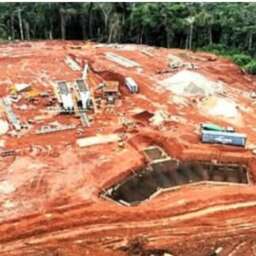
Cameroon’s 2026 finance law cuts by half the cost of urban topographic and cadastral works. Starting in January 2026, authorities will charge planimetric works linked to land registration, concessions, subdivision and simple boundary delimitation at CFA2,500 per additional are for plots larger than 5,000 square meters, down from CFA5,000 in 2025, representing a 50% reduction.
By contrast, the state will keep altimetric work fees unchanged. Authorities will continue to charge CFA3,500 per additional are for areas exceeding 1,000 square meters for mass plans, location plans required for building permits, and surveys with contour lines and elevation points. The government designed the reduction in planimetric fees to ease the financial burden on applicants, particularly in urban areas, following sharp fee increases introduced in 2025.
The measure seeks to encourage land regularization as cadastral modernization and urban land insecurity increase both demand and file complexity. Surveyor Ghislain Wilfried Evaga Eyebe said successive laws have strengthened cadastral control requirements and banned unauthorized duplication of sensitive technical documents, including cadastral plans, prints and geodetic extracts. Authorities aim to limit fraud and maintain traceability of services.
According to Evaga Eyebe, changes in rules governing topographic and cadastral works between 2023 and 2026 illustrate a series of gradual reforms. Authorities paired these reforms with tariff adjustments to balance public revenue objectives and the financial burden borne by applicants. The framework also gives greater weight to oversight, quality standards and traceability in cadastral and land-related services.
This article was initially published in French by Frédéric Nonos
Adapted in English by Ange Jason Quenum
