

























Cameroon opted to step aside from the most strategic economic portfolio within the Economic Community of Central African States (CEEAC) during commissioner appointments held in Malabo on January 16 and 17, 2026. Meeting behind closed doors and without an official communiqué, foreign ministers from the bloc’s 11 member states designated five commissioners after intense diplomatic negotiations.
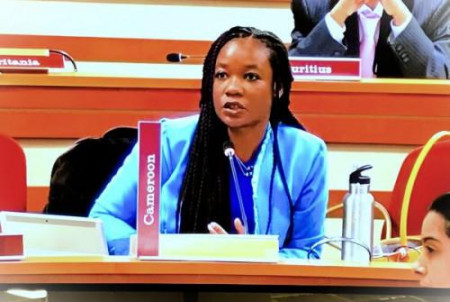
According to sources cited by Business in Cameroon, Yaoundé ultimately positioned itself on the Promotion of Gender, Human, and Social Development portfolio, backed by Cameroonian diplomat Nelly Banaken Elel. The choice ended weeks of sensitive internal deliberations within Cameroon’s political and diplomatic circles.
Initially, part of the diplomatic establishment close to the presidency had pushed for Cameroon to retain its bid for the Common Market, Economic, Monetary, and Financial Affairs portfolio, widely regarded as the backbone of the CEEAC institutional framework. Nine of the 15 objectives of the revised CEEAC Treaty relate directly to economic and monetary integration, giving this portfolio a central role in steering regional policy.
Cameroon had put forward a strong technical profile for the post. Jacob Kotcho Bongkwaha, an economist and current director of the Common Market at the CEEAC, ranked first out of 52 candidates in an evaluation conducted by consulting firm Mazars. Despite this result, Yaoundé chose a more political reading of the balance of forces. The economic portfolio was ultimately awarded to Angolan candidate Oluimo Diai Tavira da Silva, who ranked third in the assessment.
The decision surprised several observers in the region, as it marked Cameroon’s withdrawal from a role closely aligned with its long-stated ambition to act as a regional pivot power, combining political stability with industrial development and gradual economic diversification. The common market commissioner oversees trade integration, macroeconomic convergence, financial cooperation mechanisms, and discussions around a possible monetary union.
While Cameroon relinquished the economic post, the appointment of Nelly Banaken Elel opens a new phase for the diplomat at the community level. Her mandate could strengthen her profile within the organization and position her for higher responsibilities, including the presidency of the CEEAC Commission. Under the rotation principle, that position is expected to return to Cameroon in 2030, at the end of the current term held by Burundi’s Dr. Ezéchiel Nibigira.
A seasoned diplomat, minister plenipotentiary, and first counselor at Cameroon’s permanent mission to the United Nations, Banaken Elel already holds international credentials. In June 2023, she was elected vice-chair of the UN General Assembly’s Third Committee, which handles social, humanitarian, and cultural affairs.
The final composition of the CEEAC Commission must still be formally endorsed at an upcoming summit of heads of state.
Amina Malloum
