



















The IMF’s Article IV report, published March 30, reveals that Cameroon is managing three competing fiscal agendas simultaneously — the national development plan, a regional convergence pact, and IMF consolidation targets — as declining oil revenue and rising debt service costs compress the space to fully satisfy any one of them.
The International Monetary Fund (IMF) published its latest assessment of Cameroon’s economy on March 30, 2026, as part of its Article IV consultation. The report highlights a key issue: the country is currently trying to meet the requirements of three different budget frameworks at the same time, but its current level of revenue makes this difficult.
The IMF’s Executive Board called for stronger economic stability and faster reforms to support private sector-led growth. At the same time, the government’s 2026 budget is based on its National Development Strategy (SND30), which targets average annual growth of 8%. However, the IMF projects growth at 3.3% in 2026, according to data tables annexed to the March 30 report.
Although Cameroon’s debt remains at a sustainable level, below 50% of GDP, it is expected to create short-term pressure on public finances. Debt servicing will rise from 7.0% of GDP in 2025 to 8.8% in 2026, the Finance Ministry said in a note accompanying the 2026 budget law published in December 2025. The ministry also pointed to unfavourable financial market conditions and a concentration of repayments due in the short term as factors shaping the financing strategy for the year.
This three-way constraint is now the main pressure on Cameroon’s public finances as it moves beyond its IMF program.
Government revenue remains below target. In 2025, non-oil revenue reached 12.3% of GDP, compared with a target of 13.6%, according to the IMF’s March 30 report. This shortfall has several consequences. It moves the country off track from its SND30 revenue targets, widens the non-oil primary deficit — a key measure of the government’s underlying fiscal position — to 2.6% of GDP, against a target of 1.4%, and makes it harder to comply with CEMAC regional rules, which cap the fiscal reference balance at -1.5% of GDP.
Fiscal arithmetic
Under CEMAC rules, set by the Central African Economic and Monetary Community whose six member states share the CFA franc, Cameroon is required to keep its fiscal deficit below -1.3% of GDP in 2026, according to the budget law.
The IMF went further. In its March 30 statement, it called for “continued efforts to strengthen revenue mobilization and enhanced efforts towards expenditure controls, spending efficiency, and public investment management.”
Meeting these requirements while also increasing public investment from 5.3% to 5.6% of GDP, as planned in the 2026 budget, will require stronger revenue performance, something the country has struggled to achieve over the past two years.
The revenue gap is structural. In 2025, non-oil tax revenue stood at about 14% of GDP, compared with an African average of 17.2%, according to data cited by Business in Cameroon from the Finance Ministry’s medium-term budget document.
The ministry identified household taxation as the main untapped source of revenue. Individuals account for only 7% of total tax revenue, compared with 17% in similar African countries and 24% in OECD economies.
The IMF supports this approach, calling for stronger revenue mobilization as the main path to fiscal consolidation.
Signs of reform progress
The World Bank also points to some progress. In its 2025 Cameroon Economic Monitor, it highlights reforms such as electronic invoicing, audits of public sector payrolls, and changes in how the budget is allocated across ministries. These reforms all advanced in 2024 and 2025.
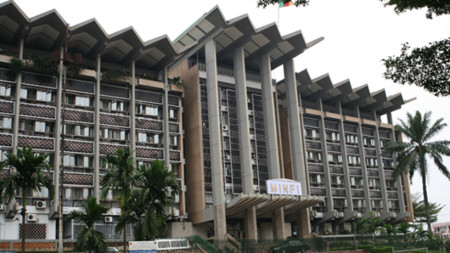
These measures have helped reduce inefficiencies that previously increased spending without improving results. The next key test will be the negotiation of a new IMF program for 2026–2029, which Finance Minister Louis Paul Motaze has publicly called for, according to Agence Ecofin’s reporting in November 2025.
Such a program would set clear fiscal targets, likely prioritizing deficit reduction over the government’s growth ambitions in the short term. In return, it would provide access to concessional financing, which the IMF sees as a better alternative to the more expensive market borrowing Cameroon has increasingly relied on.
Idriss Linge
