




























(Business in Cameroon) – Between 2018 and 2025, Cameroon’s decentralization process made gradual progress within a framework of institutional reforms designed to bring government closer to citizens, while grappling with security crises in the Anglophone regions and the Far North, along with budgetary constraints. These reforms are anchored in Law No. 2019/024 of December 24, 2019, establishing the General Code of Decentralized Local Authorities (CGCTD), which updated a process first launched in 1996 under the Constitution.
The advances—real but uneven—include improved local coordination and growing integration of the Sustainable Development Goals (SDGs) into municipal planning. Still, international assessments stress that local autonomy remains limited by administrative oversight from governors and prefects, as well as by weak institutional capacity.
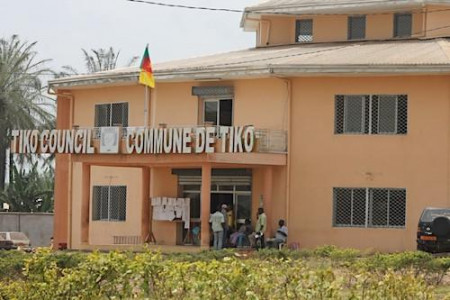
The transfer of responsibilities to municipalities continued progressively, though without major acceleration. Civil registry, urban planning, management of market infrastructure, and sanitation are among the areas legally transferred, but by 2024 only about half of Cameroon’s 360 municipalities were effectively exercising these powers. Delays in publishing implementation decrees and late financial transfers explain this gap. Civil registry management has improved in departmental capitals, reducing processing times for official documents, but remains problematic in rural zones and conflict-affected areas. Locally financed microprojects are multiplying, yet their sustainability still depends heavily on external support.
The creation of regions as decentralized local authorities, effective after the December 6, 2020 elections, stands out as the most visible stage of reform. Each of the 10 regions now has a 90-member council (70 municipal delegates and 20 representatives of traditional authorities) with its own budget. The first sessions identified regional priorities—farm-to-market roads in the East, village water systems in the North. Yet budgetary autonomy remains limited: over 80% of resources still come from state transfers, and most council presidents belong to the ruling party, reducing diversity of opinion. In the Anglophone regions, the “special status” has not prevented partial boycotts, which hinder the effective functioning of councils.
Financial capacity has been strengthened through the General Decentralization Grant (DGD), introduced in 2019. In 2024, the DGD reached CFA292.5 billion, about 5–7% of public spending—far below the 15% figure often cited in political discourse. Since 2018, more than CFA2,300 billion has been transferred to local governments, funding wells, rural markets, and sections of local roads. However, disbursement delays and treasury constraints remain frequent, and local taxation is still embryonic, preventing true financial autonomy.
Financial management modernization has been supported by the SIM-bA software, developed by AIMF and deployed in 276 municipalities since 2012, with renewed interest after 2018 through the PNDP. SIM-bA enables real-time monitoring of revenues and expenditures, reducing accounting errors in areas with reliable internet access. Extending the system to rural municipalities remains hampered by weak digital infrastructure—internet coverage was only 30% in 2024—and the high cost of training staff.
Between 2018 and 2024, the National Community-Driven Development Program (PNDP) financed roughly 3,000 to 4,000 community microprojects for a total of around CFA200 billion—two-thirds of the amount often cited in public communications. These projects delivered tangible results, including construction or rehabilitation of schools, health centers, boreholes, and rural roads, improving daily life for thousands of households. However, the program, now in its third phase since 2017, risks shutting down in 2025 for lack of new financing, underscoring local governments’ heavy reliance on external partners and the urgent need for sustainable national mechanisms.
The training of local actors has been structured around the National School of Local Administration (NASLA), opened in 2020 as the successor to CEFAM. NASLA trains about 500–1,000 elected officials and staff each year through three-to-six-month sessions—still insufficient for the needs of 360 municipalities and 10 regions. Courses cover strategic planning, financial management, and procurement. Criticism, however, points to clientelist selection practices and underrepresentation of participants from Anglophone regions.
Local governance has improved with greater budget transparency. About 55% of municipalities published budgets and accounts in 2024, compared to less than 30% in 2018. A national portal, BudgetCommune.cm, now centralizes this information, and inter-municipal competitions reward transparency. Nonetheless, limited internet coverage and reluctance from some elected officials to disclose information have slowed progress toward the government’s 80% target.
Inter-municipal cooperation is advancing with the creation or reinforcement of dozens of municipal unions, mainly in waste management, water supply, and rural electrification. Pilot experiences in the West and Mbam regions show real economies of scale. Still, the network remains incomplete and depends heavily on technical and financial assistance from external partners.
Since 2018, several municipalities have developed urban planning documents with support from the state and partners such as UN-Habitat. These aim to guide rapid urban growth (about 53% in 2024) and integrate SDGs. Implementation remains uneven due to limited monitoring and enforcement capacity.
Management of commercial facilities has focused on building or rehabilitating an average of six to ten local markets per year, with funding from PNDP or the African Development Bank. These markets generate local revenues and improve conditions for traders. However, the overall volume remains modest, and corruption in procurement reduces impact.
Citizen participation has expanded through local development committees reinforced after the CGCTD was passed. Present in most municipalities, these committees help identify priorities and monitor projects. Their effectiveness, however, varies greatly depending on the strength of local civil society and the willingness of officials to share information. Civil society groups are now calling for stronger guarantees of independence and broader access to budget data.
Overall, Cameroon’s decentralization is advancing step by step. The legal and institutional frameworks are in place, and early effects can be seen in basic services. Yet full autonomy for local governments remains a work in progress. Budgetary limits, digital infrastructure gaps, and persistent security challenges highlight the need to turn these initial gains into genuine levers of sustainable local development.
