































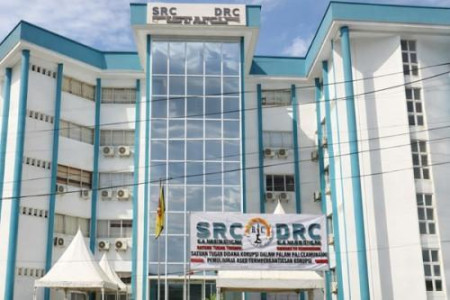
An audit report by the Audit Chamber of Cameroon’s Supreme Court has linked the deterioration of financial results at the Société de Recouvrement des Créances du Cameroun (SRC) to the weight of personnel expenses over the 2018–2022 period.
According to the magistrates, the SRC repeatedly spent more than it generated on staff compensation.
The peak occurred in 2020, when the company allocated 112% of its net banking income (PNB) to personnel costs. “That year, the health crisis linked to Covid-19 led to a decline in recoveries and, consequently, in commissions,” the report states.
The SRC, which is responsible for recovering debts owed to the state, derives most of its revenue from commissions on recovered funds. Additional income comes from interest on term deposits and returns on securities investments.
2020 and 2022: expenses above revenue
In 2020, total revenue amounted to CFA1.3 billion, while personnel expenses reached CFA1.4 billion, representing 112% of generated income.
A similar pattern occurred in 2022. With CFA1.82 billion in net banking income, the SRC spent CFA1.86 billion on personnel costs, equivalent to 102% of revenue.
For the remaining years under review, staff costs represented 66% of income in 2019, 73% in 2018 and 78% in 2021. On average, between 2018 and 2022, the SRC devoted 86% of its net banking income to staff compensation — a high ratio for an entity whose performance depends directly on the volume of recoveries.
This cost structure has weighed on profitability. The Audit Chamber notes that the SRC recorded negative results in three of the five years reviewed, including a net loss of CFA1 billion in 2022. Over the five-year period, the company posted a cumulative loss of CFA2.1 billion, described as “largely caused by staff compensation.”
Only 18 employees assigned to debt recovery
The audit also highlights an imbalance in workforce allocation.
“The SRC has 168 employees across all categories, distributed between headquarters and regional branches. As of March 31, 2024, only 18 employees were assigned to debt recovery, representing 10.71% of total staff,” the Audit Chamber states.
The institution considers that the company’s weak performance is partly explained by recruitment priorities favoring non-recovery roles.
The report also notes a 36% increase in personnel expenses between 2018 and 2022, mainly driven by new hires and higher allowances.
“A sharp rise in personnel expenses was observed in 2022, notably due to increases in seniority bonuses, the inclusion of 2022 CNPS social charges and a 5% salary adjustment,” the Chamber adds.
Ludovic Amara
