


















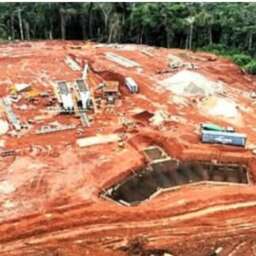

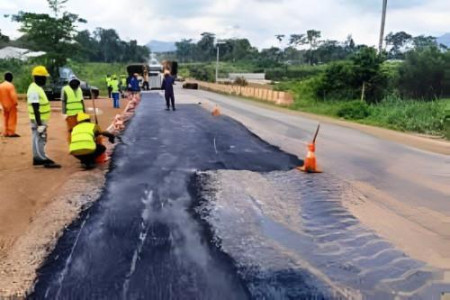
The Environmental and Social Management Plan (ESMP) for the rehabilitation of the 230-km Douala–Yaoundé road on National Road 3 is budgeted at 298 million CFA francs, according to the provisional report of the environmental and social impact study published at the end of February 2026 by the Ministry of Public Works (Mintp).
The budget aims to mitigate environmental and social risks associated with the upgrading of this strategic corridor. The road connects the political capital to the economic capital and the Autonomous Port of Douala, which serves as the country’s primary logistics hub and the main gateway for landlocked nations including Chad and the Central African Republic.
Severe deterioration and safety risks
Technical and functional diagnostics highlight advanced deterioration of the pavement and drainage infrastructure. The study also identifies road safety shortcomings, including limited visibility, incomplete treatment of accident blackspots, and unsafe interaction between motorized and non-motorized users.
These constraints are compounded by high vulnerability to climate hazards, including intense rainfall, flooding, and erosion. The study also points to a high level of accident risk affecting both road users and nearby communities.
According to the report, the impacts identified can be managed provided that prevention, mitigation, and monitoring measures are applied consistently. Effective implementation of the ESMP, in line with national regulations and World Bank standards, is essential for project compliance.
International financing expected
Financing for the rehabilitation could involve several technical and financial partners, including the Islamic Development Bank (IsDB), the World Bank, the French Development Agency (AFD), and other donors.
Commissioned in the mid-1980s with a design speed of 80 km/h, the RN3 currently supports particularly heavy traffic. Nearly 40 percent of this traffic consists of heavy goods vehicles. This traffic structure accelerates the deterioration of the roadway and puts pressure on national logistics performance.
The rehabilitation planned for 2026 forms part of a strategy aimed at improving the durability, safety, and comfort of road infrastructure. This comes as the Kribi deep-sea port and other major infrastructure projects gain importance in the sub-region.
Two-lane configuration maintained, 20-year design life
The technical option selected following preliminary design studies provides for maintaining a two-lane configuration, with occasional widening along certain sections to improve safety, visibility, and traffic comfort. This approach is based on the assumption that the Yaoundé–Douala highway will progressively absorb a significant share of transit traffic once it becomes fully operational.
Under this scenario, the lifespan of the rehabilitated RN3 is set at 20 years, structured in two phases. The first period, from 2018 to 2025, is characterized by the absence of the highway and increased pressure on the RN3. The second period, from 2025 to 2037, incorporates the redistribution of traffic following the commissioning of the highway. The objective is to optimize public investment while ensuring a satisfactory level of service, safety, and durability throughout the infrastructure’s life cycle.
Frédéric Nonos
