









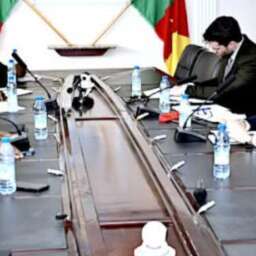












(Business in Cameroon) – The Government of Cameroon has approved the pre-draft of the 2026 State Budget, with indications of a spending increase to support youth-focused development initiatives. The decision was taken during the Cabinet meeting chaired by Prime Minister Dr Joseph Dion Ngute on 14 November 2025 in Yaounde.
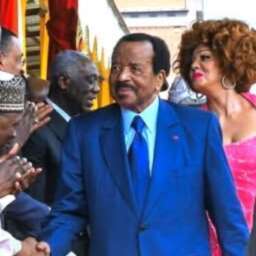
Finance Minister Louis Paul Motaze, who presented the strategic pillars of the upcoming budget, said the proposed increase aligns with directives issued by the Head of State, President Paul Biya, during his swearing-in speech on 6 November. In that address, the President announced that a portion of the State’s investment budget would be allocated to labour-intensive projects targeting youth employment, to be implemented in collaboration with regional and local authorities.
The current State Budget stands at FCFA 7,278.1 billion, following a mid-year increase from FCFA 6,740.1 billion through a presidential ordinance in July. Minister Motaze hinted that the 2026 budget will exceed this figure, with a Special Appropriation Account to be created specifically for youth employment schemes.
The draft budget also reflects the Government’s commitment to continuing major development projects under the National Development Strategy (NDS) 2020-2030. It takes into account both international and domestic fiscal challenges, while aiming to maintain economic resilience and growth.
According to projections presented at the meeting, national economic growth is expected to rise from 3.9% in 2025 to 4.3% in 2026, driven by manufacturing industries, significant public investments, and the Integrated Agropastoral and Fisheries Import-Substitution Plan (PIISAH). Inflation is forecast to decline to 3% in 2026, compared to 3.2% in 2025.
The Minister of Economy, Planning and Regional Development, Alamine Ousmane Mey, also addressed the Cabinet, outlining the structure and priorities of the 2026 Public Investment Budget (PIB). He confirmed an increase in allocations, with a focus on production and infrastructure sectors, the completion of major ongoing projects, and the promotion of local processing of consumer goods.
Other priorities include the continuation of the Reconstruction Plan for disaster-affected regions, acceleration of decentralisation through increased regional funding, and expanded investment in energy production and transport infrastructure. Provisions will also be made to mobilise counterpart funding for externally financed projects.
The financing of the 2026 budget will rely on oil and non-oil revenues, project loans, government securities, and bank financing. Measures to improve the tax climate and stimulate private investment are also included in the draft.
Following the presentations, the Cabinet endorsed the draft budget’s main orientations. The Minister of Finance was instructed to consolidate the document for submission to the President of the Republic, ahead of its formal presentation to Parliament for scrutiny and adoption.
Mercy Fosoh
