




























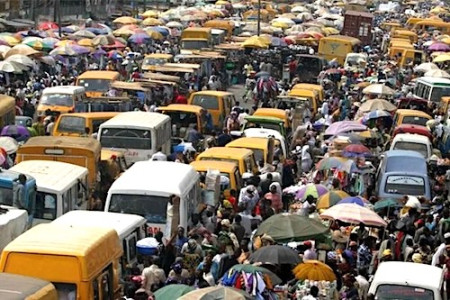
(YANGO GROUP) – In fast-growing cities like Douala and Yaoundé, where congestion shapes everyday life and economic activity, AI-powered routing technology is increasingly emerging as a practical urban efficiency tool. In 2025 alone, commuters in Cameroon recovered a combined 136,026 hours, with users saving an average of 81 minutes per year in Yaoundé and 63 minutes per year in Douala, thanks to intelligent route optimisation that dynamically adapts to real-time traffic conditions.

These local gains are part of a broader continental and global trend. According to a study published by Yango Group, a global technology company digitalising urban services, advanced AI-powered routing technologies saved African urban commuters nearly 2 million hours in 2025, contributing to a global total of more than 5 million hours saved across over 20 cities worldwide — the equivalent of 600 years of human time returned to communities.
Across Africa, cities are expanding at an unprecedented pace. As vehicle numbers increase and road networks face mounting pressure, congestion has become one of the continent’s most pressing urban challenges. In this context, measurable time savings represent not only convenience, but also improved productivity and urban resilience.
Yango Group’s study, based on an analysis of millions of Yango Ride trips conducted in 2025, compared AI-optimised routes with static shortest-path routes that do not factor in live traffic conditions. The results demonstrate that machine learning combined with real-time traffic data can deliver scalable, measurable efficiency gains in complex urban environments.
“In many African cities, time lost in traffic directly impacts productivity, family life, and economic opportunity,” said Adeniyi Adebayo, Chief Business Officer of Yango Group. “What these results show is that AI is not abstract — it is practical infrastructure. By embedding intelligence into everyday mobility services, we can help cities operate more efficiently and return valuable time to people.”
The technology processes information about road characteristics, traffic light patterns, turn complexity, and predictive congestion modeling. Its self-learning architecture continuously improves by comparing predicted and actual travel times, adapting to the unique mobility patterns of each city — including the dynamic road conditions typical of Douala and Yaoundé.
Beyond time savings, intelligent routing contributes to broader urban sustainability goals. By minimizing idle time and optimizing traffic distribution, Yango’s AI technology helps improve fuel efficiency, lower emissions, and decrease localized congestion — core pillars of smart city development. As Cameroon’s urban population continues to grow, AI-powered mobility solutions are emerging not just as convenience tools, but as critical components of modern urban infrastructure.
While African cities recorded significant gains, the global impact reached more than 5 million hours saved across cities including Lima and Guatemala City — highlighting the scalability of AI-powered mobility solutions across diverse urban environments.
Operating in more than 35 countries across the Middle East, Africa and Latin America, Yango Group continues to develop technologies that transform complex algorithms into accessible tools — supporting smarter, more efficient and more human-centered cities.
For the complete research methodology and detailed results across all cities, visit here. A short video explaining the methodology is also available here.

