





























(Business in Cameroon) – Industrial production prices in Cameroon rose by 0.6% in the second quarter of 2025 compared to the first quarter of 2025, according to the latest bulletin from the National Institute of Statistics (NIS). The figure is based on the Industrial Production Price Index (IPPI), which tracks factory-gate prices (excluding taxes) for goods sold domestically or exported.
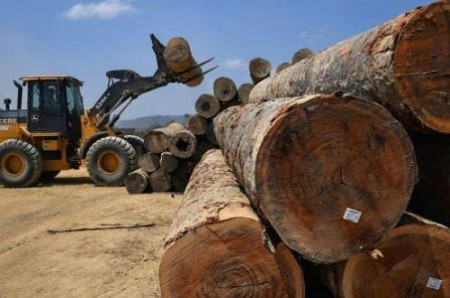
The quarterly increase was chiefly driven by higher prices in the manufacturing sector, where production costs surged 1.2%, pushed upward by strong jumps in agro-food (+1.8%), wood, cardboard, and printing industries (+3.4%).
The NIS reports that year-on-year industrial prices rose 3.3% in Q2 2025, almost double the increase recorded during the same period in 2024, when industrial prices rose 1.6% year-on-year, according to the NIS Quarterly Analysis of the IPPI, Second Quarter 2024. Manufacturing prices alone rose 5.6% year-on-year, reflecting persistent pressure across key industrial sectors.
Despite the overall rise, several sectors posted declines. The extractive industries, including hydrocarbon extraction, fell 0.9% in Q2 2025 and 2.6% year-on-year, according to NIS. Chemical, pharmaceutical, and plastics industries also slipped 0.9%, with the cosmetics sub-category pulling the index down. Metallurgy and metal-product manufacturers recorded a 3.3% quarterly fall due to a steep 7% drop in aluminium-based product prices.
Looking at the broader trend, the NIS notes that at the end of last year, industrial producer prices were considerably higher. In Q4 2024, the IPPI had risen 5.9% year-on-year, based on the NIS IPPI Analysis Note, Fourth Quarter 2024. Quarter-on-quarter, however, prices at the end of 2024 were almost flat at –0.4%, signalling that the stronger acceleration seen in 2025 is relatively recent.
The rise in production prices is linked to structural cost pressures across Cameroon’s industrial base. A study by the Investment Promotion Agency (IPA) titled “Cost of Factors of Industrial Production in Cameroon” identifies high electricity tariffs, imported input costs, transport charges, and tax burdens as key contributors to elevated production costs. The World Bank’s 2025 Cameroon Economic Update also highlights ongoing inflationary pressures and increased import requirements for industrial inputs, both of which have added to cost escalation for manufacturers.
Government responses have focused on easing structural constraints on industry. The 2025 Budget Preparation Circular, published by the Ministry of Finance, outlines commitments to expand energy supply to industries, improve local availability of agro-industrial inputs, and increase financial support to productive sectors. The government has also implemented reforms to encourage domestic processing, including raising the export tax on primary wood products from 50% to 75%, as detailed in the World Bank report, to boost local value-addition and stabilise raw-material supplies for domestic wood-processing firms.
According to the NIS, the mixed performance across sectors, manufacturing rising while chemicals and extractives fall, produced a “modest but significant” overall increase of 0.6% in Cameroon’s industrial producer prices for Q2 2025. The reports add that the possible consequence of this increase in producer prices is a pass-through to final consumer prices.
Mercy Fosoh
