
































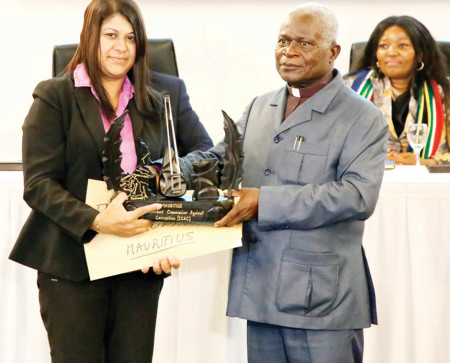
Cameroon has assumed the presidency of the Association of Anti-Corruption Agencies in Commonwealth Africa, AAACoA, for the 2026-2027 term, placing the country at the centre of regional governance reforms focused on artificial intelligence, institutional accountability and investment confidence.
The Chairman of Cameroon’s National Anti-Corruption Commission, CONAC, Rev. Dr. Dieudonné Massi Gams, was elected at the close of the 16th Commonwealth Regional Conference of Heads of Anti-Corruption Agencies in Africa held in Yaounde on May 8, 2026. His election gives Cameroon a leading role in shaping anti-corruption strategies across Commonwealth Africa over the next 12 months.
Speaking in an interview with Cameroon Tribune, Massi Gams outlined three priorities for his mandate, namely strengthening ongoing reforms within anti-corruption institutions, placing women and young people at the centre of integrity campaigns, and deploying artificial intelligence tools to improve transparency and fraud detection.
The conference ended with recommendations urging African anti-corruption bodies to adopt AI-driven systems, deepen intelligence-sharing, expand e-governance reforms and strengthen cooperation on asset recovery and illicit financial flows.
Massi Gams said the organisation intended to build continuity within anti-corruption institutions rather than depend on changes in leadership or administrations.
“The fight against corruption cannot depend on changing personalities or changing administrations. It must be institutional, continuous and sustainable. We must consolidate the gains already realised and ensure that the seeds planted today produce lasting results for future generations,” Massi Gams stated in the interview.
The new AAACoA Chair said Cameroon’s presidency comes at a time when African governments are increasingly linking governance reforms to economic competitiveness, digital transformation and public sector efficiency.
He said AI would play a strategic role in improving investigations, monitoring public transactions and reducing discretionary practices in state services.
“Artificial Intelligence can help us detect fraud faster, improve transparency in public procurement, monitor suspicious financial transactions, strengthen investigations and reduce human discretion in public service delivery. Technology must become the ally of integrity,” Massi Gams stated.
Governance, digital reforms and investment stakes
The Yaounde conference called on Commonwealth African governments to accelerate electronic procurement systems, online tax and payment platforms, and digitised public services aimed at reducing direct human contact in administrative procedures. Delegates also encouraged stronger collaboration between governments, civil society organisations, the private sector, academia and international development partners in preventing corruption and improving public accountability.
Massi Gams said Cameroon would require broad institutional coordination to implement the conference recommendations, including support from the Programme for the Acceleration of the Digital Transformation of Cameroon, PATNUC, parliamentary anti-corruption networks, youth integrity clubs and women’s associations.
According to CONAC’s chairman, the country’s new leadership role could strengthen cooperation with institutions such as the Commonwealth Secretariat, the United Nations Office on Drugs and Crime, the African Union, the World Bank and bilateral development agencies.
Such partnerships, he said, could support institutional modernisation, digital anti-corruption infrastructure, forensic investigation tools and staff training within CONAC and related institutions.
Massi Gams added that Cameroon could leverage the presidency to position itself among early adopters of AI-based anti-corruption systems in Africa, particularly in sectors exposed to procurement fraud and financial irregularities.
“Chairing the Association gives Cameroon greater visibility in governance circles and an agenda-setting role within Commonwealth Africa. A stronger anti-corruption image can improve investor confidence because international investors and development partners often assess governance indicators before committing resources,” he said.
The conference also stressed the importance of prevention through ethics education and public awareness campaigns, alongside stronger mechanisms for tracing illicit financial flows and recovering stolen public assets hidden abroad.
Massi Gams said young people and women would remain central to the association’s action plan during Cameroon’s presidency. He stated that women represent pillars of integrity in African societies, while young people embody the continent’s creativity, energy and digital intelligence. According to him, empowering those groups would strengthen transparency and accountability efforts across Commonwealth Africa.
Cameroon’s presidency of the association comes as governments across Africa continue to integrate digital governance systems into public administration reforms aimed at improving transparency, public service delivery and investor perception.
Mercy Fosoh

