


























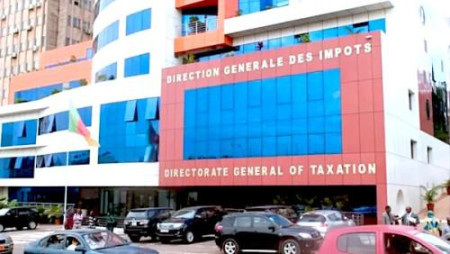
Cameroon’s Ministry of Finance awarded on April 10, 2026 a contract for the design, supply, and installation of an Integrated Tax and Duty Management System (SIGIT) as part of the modernization of the information system used by the Directorate General of Taxation (DGI).
The decision, signed by Finance Minister Louis Paul Motaze, marks the conclusion of a restricted international tender launched on February 24, 2025.
According to the award document, the contract was granted to a consortium comprising ARABSOFT and ORADIST from Tunisia, C2D from Canada, and DBS from Cameroon.
The contract is valued at €5.997 million excluding taxes, equivalent to about CFA3.93 billion, and €7.15 million including taxes, or nearly CFA4.7 billion.
Implementation is expected to last 24 months.
The project is financed by German development bank KfW under the DGI information systems modernization program launched in 2018.
The contract award followed a no-objection notice issued by the lender on April 7, 2026 after the evaluation of financial offers submitted during the second phase of the procurement process.
The selected consortium will oversee the full implementation cycle of the future system, including design, supply, installation, commissioning, and user training.
The objective is to equip Cameroon’s tax administration with an integrated platform capable of handling all operations related to tax and duty management.
The future SIGIT platform should notably support taxpayer management, tax rules and reference systems, data processing and analysis, and interoperability with systems used by other administrations, especially customs, budget, and treasury services.
The project also includes digital services for taxpayers.
Authorities plan to introduce a taxpayer portal allowing users to file declarations, make payments, monitor cases, and manage complaints.
The system will also include security, operational traceability, backup, and maintenance functions.
Beyond the technical aspects, the contractor will also handle project planning, business-process integration, testing and deployment phases, migration of existing data, and knowledge transfer to DGI teams.
The consortium will additionally be responsible for setting up a support mechanism, including a help center, as well as ensuring warranty coverage and post-deployment monitoring of the system.
Through the project, Cameroonian authorities aim to accelerate the digitalization of tax administration, improve services provided to taxpayers, and strengthen domestic revenue mobilization at a time of growing pressure on public finances.
According to official data cited in the report, tax revenue reached CFA1,956.8 billion at the end of June, representing a 44.9% execution rate relative to the annual target.
Revenue from taxes and duties specifically totaled CFA1,410.7 billion, corresponding to a 43.8% execution rate.
Amina Malloum

