

























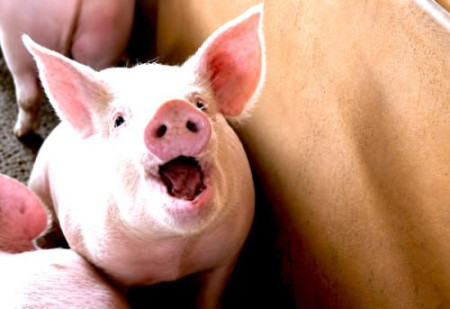
President Paul Biya signed a decree on May 4, 2026, authorizing the Minister of Economy to conclude a CFA5.6 billion financing agreement with Deutsche Bank Spain for the construction, equipment, and commissioning of three industrial pig farms.
The facilities will be built in Kounden in the West region, Bali in the Northwest region, and Kaélé in the Far North region.
The financing forms part of Cameroon’s strategy to modernize the pork industry, notably through the Consular Project for the Development of Pig Farming (Proporc). Authorities aim to accelerate the transition from largely traditional production methods to third-generation industrial production in order to better meet domestic demand and eventually target export markets.
The three locations were selected as part of a broader effort to decentralize production and strengthen food security. The project also includes the introduction of improved breeds to renew the national herd and increase sector productivity.
The Chamber of Agriculture, Fisheries, Livestock and Forests (Capef) will oversee implementation with technical support from specialized companies. According to available information, the three sites should produce about 30,000 pigs annually, or around 10,000 animals per farm.
Beyond these three facilities, the financing supports a broader ambition to build 500 modern farms over the medium term, as authorities seek to develop a market viewed as highly promising amid rising demand, particularly in major cities.
According to a study by London-based firm Trends & Poor, Cameroon’s pork market was valued at more than CFA230 billion in 2024, with production volume estimated at 77,000 tons, compared with 43,890 tons in 2023, according to the Ministry of Livestock.
The firm forecasts annual growth of nearly 9%, which could push the market close to CFA490 billion by 2030.
Frédéric Nonos

