


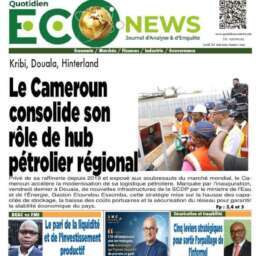
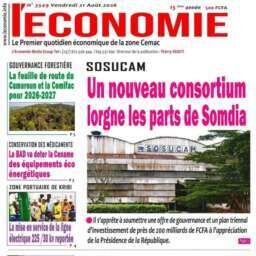


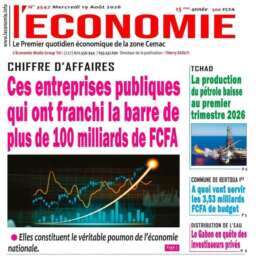



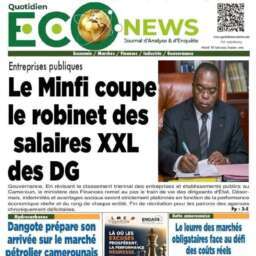





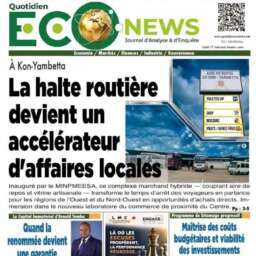






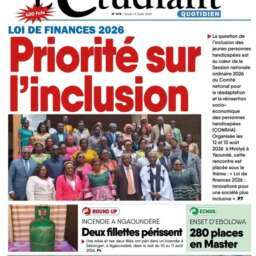


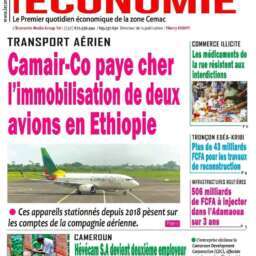

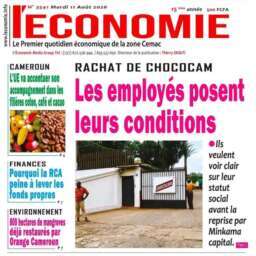

Investors seeking to deploy tens of millions of euros in the CEMAC zone face a structural constraint: the lack of reliable, locally produced economic information. Financial coverage of Central Africa remains largely driven by international or pan-African media based outside the region, limiting access to contextualised reporting.
For Celestin Guela Simo, Director General of Afriland First Bank, this gap reflects a deeper weakness in the region’s financial architecture.
In a recent statement, he argued that the absence of a strong economic press undermines market development. According to him, specialised financial media plays a central role in deepening markets, improving investor understanding, strengthening dialogue between regulators and operators, and reducing systemic risks linked to misinformation.
He pointed to the potential impact of rumours, noting that false information about a bank’s solvency could trigger a bank run within 48 hours. In this context, a credible and independent economic press acts as a stabilising force by providing verified data and limiting panic-driven behaviour.
Guela Simo also criticised the limited engagement of financial institutions with the media. Banks, insurers, microfinance institutions and regulators cannot call for greater financial literacy while remaining absent from public debate, he said. Engagement, he added, should not take the form of promotional communication, but of structured interaction: explaining financial mechanisms, sharing relevant data and supporting the development of specialised journalism.
“An economy does not develop on capital, infrastructure or regulation alone. It also requires accessible and reliable information. Without it, economic activity evolves in opacity,” he said.
However, he warned against poorly structured support for the media sector. He identified three key risks: editorial capture when outlets depend excessively on advertisers; ineffective dispersion of resources without clear impact criteria; and confusion between advertising, sponsorship and editorial partnerships, which can weaken governance and credibility.
To address these challenges, he outlined three priorities. First, improving access by facilitating exchanges between journalists and financial institutions, while respecting confidentiality constraints. Second, strengthening training in areas such as IFRS 9 standards, COBAC regulation, consolidated accounts analysis and risk assessment. Third, promoting excellence through the creation of a well-funded CEMAC Economic Journalism Prize, awarded by an independent jury.
The initiative is part of Afriland First Bank’s Horizon 2030 strategy. The bank has already begun supporting economic journalism in Cameroon and is calling on other financial institutions to adopt similar commitments.
Guela Simo linked the development of a credible economic press to broader regional priorities, including economic diversification, infrastructure financing, energy transition and capital market development, arguing that these objectives require informed public debate and high-quality financial reporting.
Mercy Fosoh

