





























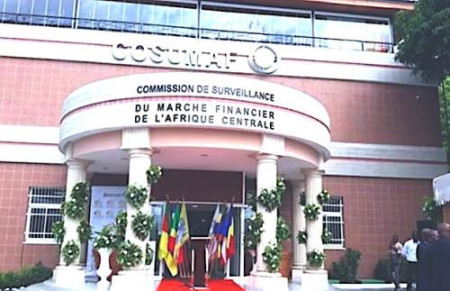
The Central African Financial Market Supervisory Commission (Cosumaf) is preparing to introduce crowdfunding into the regulated financial landscape of the CEMAC region. In its 2026 priority action plan, adopted on April 1, the regulator lists the rollout of crowdfunding as a key step to improve access to capital for very small, small, and medium-sized enterprises.
The concept allows businesses or project sponsors to raise funds from a large pool of investors through digital platforms. In the model envisioned by Cosumaf, however, crowdfunding will operate within an investment framework rather than a donation-based system. This places emphasis on investor protection, transparency, and platform oversight.
A new financing channel for SMEs
The move responds to structural constraints in the region. SMEs in CEMAC still rely heavily on bank credit, often face strict collateral requirements, and have limited access to capital markets. By creating a regulated crowdfunding segment, Cosumaf aims to expand financing options for companies that cannot yet tap traditional funding channels.
The impact will not be immediate. Its effectiveness will depend on several factors, including clear rules for platform operators, strong project selection standards, transparency for investors, manageable costs, and robust risk management. Without these safeguards, crowdfunding could expose investors to poorly vetted projects or weakly supervised platforms.
Part of a broader market framework
The initiative builds on ongoing efforts to structure the regional financial market. Regulation No. 01/22/CEMAC/UMAC/CM/COSUMAF, adopted in July 2022, established the legal framework governing the Central African financial market. Since then, Cosumaf has gradually added implementing rules for market participants.
Among them is Instruction No. 46-25 of December 15, 2025, which sets requirements for the approval of executives at licensed financial institutions. While not specific to crowdfunding, it outlines standards for competence, integrity, experience, and availability that future crowdfunding platforms will also need to meet.
Trust as the key factor
The regional market remains relatively small but shows signs of growth. According to Cosumaf, public offerings reached CFA361.78 billion in 2025, while private placements totaled CFA6 billion. These figures provide a snapshot of recent activity but do not yet indicate the full potential of crowdfunding.
For the regulator, the challenge is twofold: open a new financing channel for businesses while ensuring that innovation develops within a clear and secure framework. For SMEs, crowdfunding could become a complementary funding tool. For the market, it may help broaden the base of both investors and issuers.
Ultimately, its impact will depend less on its launch than on the level of trust it can establish. At this stage, crowdfunding in CEMAC remains a regulatory project in progress rather than a fully operational transformation.
Frédéric Nonos

