



















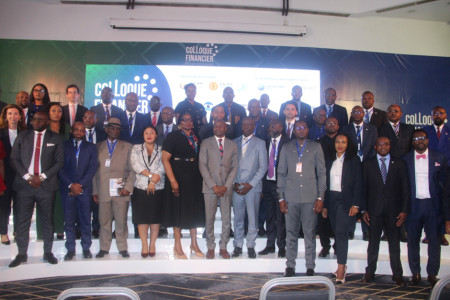
The second edition of the International Financial Colloquium, COLFINI 2, opened on Thursday April 23 at the Hilton Hotel in Yaoundé. It brings together government officials, institutional investors, financial experts and regional regulators to tackle one of Central Africa’s most pressing economic challenges: how to sustainably finance infrastructure across the CEMAC zone.
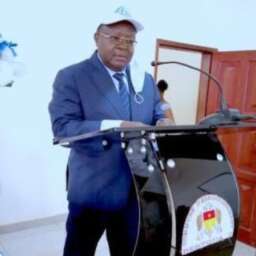
The two-day forum, running through April 24, is organized by financial firms Horus Investment Capital and Contacturer Capital, and held under the high patronage of Cameroon’s Ministry of Finance. The opening ceremony was presided over by the Secretary General of the Ministry of Finance, Gilbert Didier Edoa, who stood in for the minister.
He highlighted that the central issue facing governments is how to sustainably mobilize funding for development, particularly in a global environment marked by rising financing costs and uncertainty.
“The financing of our economies and infrastructures is now a central concern. Without solid infrastructure, there is no economic transformation, no regional integration, and no sustainable growth. Today, it is no longer just about understanding, it is about acting and mobilizing resources more efficiently,” Edoa said in his opening address.
According to him, the event is structured around key themes including assessing the current state of the CEMAC financial market, expanding the investor base, improving liquidity, diversifying financial instruments and strengthening expertise in structured finance.
According to the official press dossier, COLFINI 2 aims to position the regional financial market as a strategic lever for infrastructure financing, at a time when budget constraints, dependence on external funding and public debt pressures continue to challenge governments in Central Africa.
Participants at the forum include government representatives, financial institutions, market regulators, private sector operators and international partners, all seeking practical solutions to long-standing financing gaps in sectors such as transport, energy, telecommunications and public infrastructure.
Edoa stressed that while Cameroon has pursued prudent public finance management and directed debt towards productive investments, the development of the financial market requires collective action involving the state, regulators, investors and experts.
“The development of our financial market is a collective project. It requires mobilization from all actors and a shared demand for transparency, discipline and innovation. The ideas from this colloquium must be concrete, useful and applicable,” he said.
Organizers push execution agenda
In his welcome address, Director General of Contacturer Capital, Paul Onono, underscored the strategic importance of financing as a matter of economic sovereignty, calling for a shift from reliance on external funding to stronger mobilization of local resources.
He noted that while the region is not short of capital, the challenge lies in structuring and directing those resources effectively towards priority projects. Onono further emphasized that infrastructure projects are fundamental to economic sovereignty and must be financed through stronger regional financial systems capable of mobilizing local savings, including from the diaspora.
He also introduced a new feature in this year’s edition, the “Deal Room”, designed to move discussions towards concrete transactions and project execution.
“The time for diagnosis is behind us, the time for execution begins now. We must move from ideas to projects, from exchanges to transactions, and from intentions to realizations,” he said.
Discussions also focused on the role of endogenous financing, including domestic resources and local capital markets, alongside external funding from international partners. Experts pointed to the importance of building an ecosystem that enables sustainable access to financial markets, with appropriate governance, financial instruments and technical expertise.
Building on past outcomes
The first edition of COLFINI in 2025 focused on sovereign debt sustainability and restructuring mechanisms. According to organizers, some CEMAC countries have since taken steps to restructure their debt and improve treasury management, reflecting early uptake of recommendations.
The 2026 edition shifts attention towards financial engineering, innovation and the operationalization of financing mechanisms, with the objective of translating discussions into actionable outcomes.
The colloquium is expected to deliver concrete recommendations, strengthen collaboration between public and private actors, and enhance the role of regional expertise in financing large-scale infrastructure projects across the CEMAC zone.
Mercy Fosoh

