

























Cameroon is working to regain access to European and American shrimp markets, launching a training drive to bring the country’s export practices in line with regulatory standards that have barred its products from those trade routes.
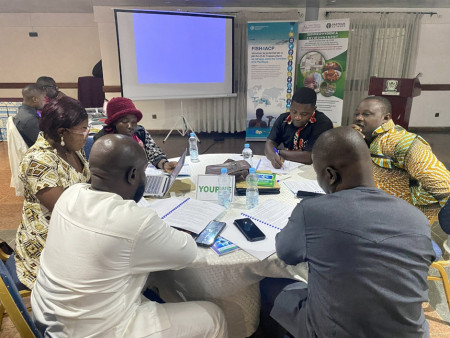
A two-day workshop held in Douala on April 15-16 brought together shrimp industry operators, government agencies and technical partners to close compliance gaps in traceability, hygiene and food-contact materials — the areas where Cameroonian exporters have fallen short of requirements enforced by the European Union and the United States.
The event was organized under the Fish4ACP program, a Food and Agriculture Organization-led initiative funded by the European Union and Germany’s Federal Ministry for Economic Cooperation and Development. The Centre Pasteur du Cameroun, which holds ISO 17025 accreditation for food and environmental quality control, delivered the technical content.
Cameroon’s shrimp sector generates roughly $85 million a year, according to a Fish4ACP and Institute of Fisheries Sciences assessment, with industrial operators accounting for about 80% of catches and artisanal fishers the remainder. The sector employs around 2,000 people, a third of them women.
Annual shrimp production stands at an estimated 4,200 tons from industrial fishing and more than 1,000 tons from artisanal operations. A survey conducted by the FAO and the Ministry of Livestock, Fisheries and Animal Industries in May 2024, covering 154 coastal camps, put artisanal marine shrimp catches at approximately 6,000 tons annually, valued at 30 billion CFA francs.
The global shrimp market was valued at $68.84 billion in 2024 and is projected to reach $102.48 billion by 2033, according to Renub Research. EU shrimp imports totaled nearly 395,000 metric tons in the first nine months of 2024, running 4% ahead of the same period a year earlier, Shrimp Insights data show.
“We have shrimp of exceptional quality, by all accounts,” said Victor Viban Banah, regional delegate for the Littoral of the Ministry of Livestock, Fisheries and Animal Industries, who presided over the workshop. “But to gain access to the most lucrative markets, certain sanitary requirements must be met, and we are working on it.”
The workshop covered applicable regulatory frameworks, traceability and hygiene practices, and findings from a sector-specific market study. A dedicated session was held for the National Veterinary Laboratory, which certifies shrimp products ahead of export.
“It is on that basis that we were invited to share our experience and expertise with other actors in the shrimp value chain,” said Suzanne Belinga, deputy director general of the Centre Pasteur du Cameroun, referring to the institution’s accreditation status.
The Fish4ACP program employs around 1,800 predominantly young people across Cameroon’s shrimp value chain.
Mercy Fosoh

