













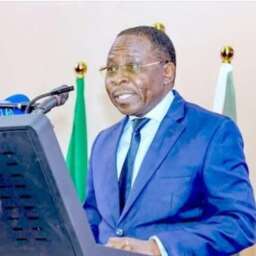


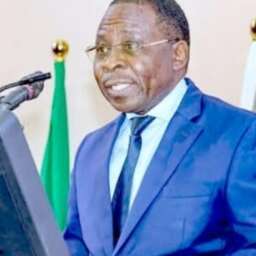






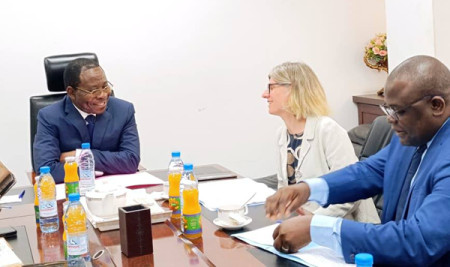
Cameroon has stepped up efforts to accelerate its national water reform agenda. The Minister of Water and Energy, Gaston Eloundou Essomba, held high-level talks recently in Yaounde with a World Bank delegation to fast-track the National Water Compact and accelerate implementation of the Sustainable, Efficient, and Equitable Water, Sanitation and Hygiene (SEEWASH) project.
The meeting, led by World Bank water expert for West and Central Africa Anna Cestari, focused on finalising the country’s flagship reform programme and improving execution timelines amid stricter performance targets.
According to the Ministry of Water Resources and Energy, the discussions come as the government seeks to mobilise 2,426 billion CFA francs (XAF) required to transform access to potable water and sanitation services nationwide. It emerged from the meeting that a portion of this financing has already been secured through development partners including the World Bank, UNICEF, the European Union and the International Finance Corporation, while a funding gap remains.
The SEEWASH project, now operational, is being prioritised with accelerated recruitment, administrative processing and the establishment of a detailed activity schedule to ensure timely delivery. Authorities are targeting improved annual disbursement rates of up to 30%.
Officials confirmed that the National Water Compact is structured around high-impact priorities designed to support economic development. These include expanding access to drinking water and sanitation in both urban and rural areas, scaling up agricultural irrigation to strengthen food security, and improving climate risk management through infrastructure capable of mitigating floods and droughts. Cameroon’s water resource potential, estimated at over 610 billion cubic metres annually, remains underutilised due to disparities in access, particularly between regions, highlighting the economic case for investment in distribution and governance systems.
The Ministry of Water Resources and Energy revealed that the Compact provides a strategic framework to modernise the sector and secure investments through to 2030. The priority is to ensure that implementation delivers concrete and measurable results.
The government also convened a strategic roundtable bringing together public institutions, decentralised authorities, development partners and sector stakeholders to refine the Compact and strengthen coordination. The initiative aims to improve governance, promote productive uses of water to support economic activity, and reinforce institutional capacity while preserving ecosystems. Weekly monitoring meetings and improved procedural planning have been agreed with partners to reduce delays and enhance project execution.
The National Water Compact aligns with Cameroon’s National Development Strategy, NDS30, and the United Nations Sustainable Development Goals, particularly Goal 6 on clean water and sanitation. Authorities are seeking broader stakeholder engagement to close the remaining financing gap and finalise the policy framework ahead of full-scale implementation, positioning the water sector as a key driver of inclusive growth and resilience.
Mercy Fosoh

