


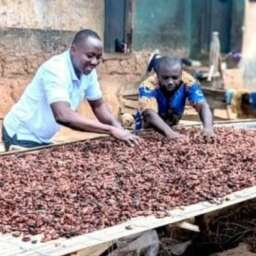



























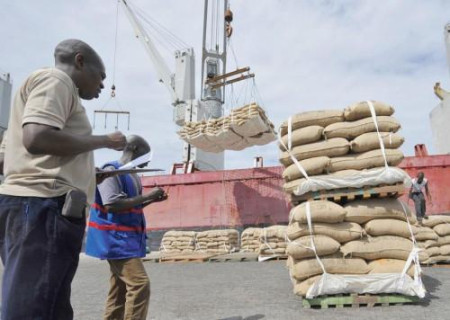
Cocoa overtook crude oil as Cameroon’s top export in 2025, according to a report on foreign trade trends published by the National Institute of Statistics (INS).
Cocoa beans accounted for 26.3% of export earnings, compared with 22.9% for crude oil. Liquefied natural gas ranked third at 11.4%, while cocoa paste and butter together made up 12.2%. Wood products contributed 7.1% and raw cotton 4%.
The figures point to a sharp shift in Cameroon’s export structure. For decades, oil was the main source of foreign exchange. Cocoa remained a key export but never overtook oil. That order reversed in 2025.
The INS said the change was mainly driven by prices. Oil exports were hit by falling global prices, while cocoa benefited from a strong international market.
A price-driven shift
“The increase in cocoa exports is linked to rising international prices, with export unit prices remaining favorable for producers,” the INS said.
After a 90% jump in cocoa export revenues in 2024, earnings rose a further 18.7% year-on-year in 2025 to 810.2 billion CFA francs ($1.33 billion).
By contrast, oil revenues continued to decline. “Year-on-year, revenues fell by 29.6% to 705.6 billion CFA francs, or 22.9% of total export earnings,” the INS said. Export volumes also dropped by 15.6%, while unit prices fell 16.7% in line with global crude prices.
The contrast is stark: cocoa has been supported by historically high prices, while oil has been weighed down by both lower prices and declining volumes. The shift seen in 2025 reflects changing market conditions rather than a structural replacement of oil by cocoa at this stage.
A changing cocoa industry
Growth in the cocoa sector is no longer limited to raw beans. Cocoa paste and butter have become significant export earners, generating 377 billion CFA francs, or 12.2% of total revenues in 2025.
This reflects changes over the past decade in the domestic cocoa industry. New processors such as Neo Industry, Atlantic Cocoa and Africa Processing have set up operations since 2015, while existing players have expanded capacity. This includes SIC Cacaos, a subsidiary of Switzerland’s Barry Callebaut.
Local processing is gaining ground. Cameroon surpassed the 100,000-tonne mark for beans processed domestically for the first time, according to the National Cocoa and Coffee Board (ONCC).
This shift is beginning to show in the country’s global position. Cameroon ranked as the world’s seventh-largest exporter of cocoa paste and ninth-largest exporter of cocoa butter in 2024, according to a competitiveness report from the Ministry of Economy’s think tank.
Cocoa’s growing share of export earnings is no longer driven solely by raw bean exports. It is increasingly supported by domestic processing, strengthening the sector’s role in the economy.
However, cocoa’s top ranking in 2025 remains largely tied to high global prices. While the expansion of local processing provides a more structural driver, it remains uncertain whether this shift will prove permanent.
Brice R. Mbodiam

