




























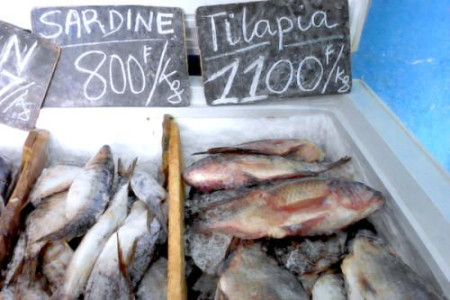
Cameroon’s spending on frozen fish imports rose sharply in 2025, highlighting the country’s continued dependence on foreign supply to meet domestic demand.
According to the National Institute of Statistics (INS), the country imported 267,259 tons of frozen marine fish in 2025, up from about 207,000 tons in 2024. That marks an increase of more than 60,000 tons, or 29.1% year-on-year.
In value terms, imports reached CFA230.8 billion, compared with just over CFA167 billion a year earlier. The import bill thus rose by more than CFA63 billion, a 38% increase.
The faster rise in spending compared to volumes suggests that the increase was not driven by demand alone, but also by higher international prices. In other words, Cameroon not only imported more fish, but paid more for each unit.
Frozen fish remains one of the country’s largest food import categories, alongside cereals, and continues to weigh heavily on the trade deficit.
The reliance on imports reflects a structural gap between local supply and national demand, estimated at around 500,000 tons per year. To address this imbalance, the government plans to scale up domestic production.
According to the Ministry of Finance’s 2025–2027 economic and budget framework, fish production is expected to rise from 225,000 tons in 2024 to 600,000 tons by 2027—an increase of 166.7% over four years.
To meet this target, authorities are focusing on expanding and rehabilitating fishing infrastructure, along with implementing the Integrated Agro-Pastoral and Fisheries Import-Substitution Plan, aimed at boosting local output and gradually reducing reliance on imports.
BRM

