


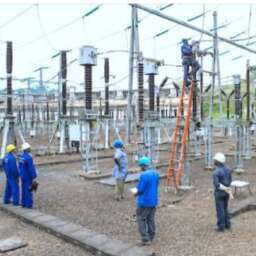

























The Ministry of Water and Energy on March 31, 2026 launched a call for expressions of interest to recruit a consultant to carry out a technical and financial audit of the Bini à Warak hydroelectric project, in a further step to revive the stalled scheme aimed at improving electricity supply in northern Cameroon.
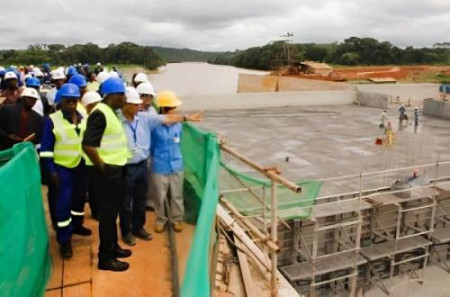
Located in the Adamaoua region, the project was awarded in 2013 to China’s Sinohydro Corporation Limited under an EPC contract covering the design, supply, construction and commissioning of a 75-MW hydropower plant. Work stopped in 2018 after Chinese lender ICBC suspended financing amid difficulties related to guarantee payments under the financing structure.
A stalled site despite CFA francs 20 billion already spent
Since construction halted, the site has remained idle, with about CFA francs 20 billion already spent on preparatory works, according to project data. As a result, authorities have revised the project’s development framework.
The government is now working with British firm Savannah Energy, with which it has signed a memorandum of understanding to develop the project as an independent power producer.
The audit aims to provide a detailed assessment of work completed on site. It will verify whether the work complies with the original contract terms and international standards, and confirm the actual amounts invested in studies and construction.
The selected consultant will also review risk management and project impacts in line with current best practices. Financially, the mandate includes issuing an independent opinion on the project’s overall position through verification of investments, review of accounting records, and validation of invoices submitted to the state or financial partners.
The audit will also examine debt servicing and counterpart funds already mobilised. The consultant will have three months to complete the assignment.
Revised configuration with solar component
The project has also been reconfigured to include a 40-MW solar photovoltaic component, bringing total installed capacity to 95 MW.
This hybrid setup is intended to stabilise electricity supply in northern regions, where demand far exceeds available capacity. Output from the Lagdo dam remains limited, partly due to silting that reduces generation capacity.
According to Savannah Energy, financial close could be reached by 2028. The company plans to sell part of its stake to attract new investors and strengthen the project’s financing.
Under the same projections, the solar component could be commissioned within two years of financial close, while the hydropower plant is expected to come online about four years after final approval.
If the timeline is maintained, Bini à Warak would help secure electricity supply in the Adamaoua, North and Far North regions. It would also reduce reliance on costly thermal power generation.
By launching the audit, the government aims to resolve remaining technical and financial uncertainties, a step it sees as key to restoring investor confidence and advancing one of the country’s most anticipated energy projects.
Amina Malloum

