


























Cameroon is advancing its second-generation agriculture policy through the distribution of tractors to agropoles in the Centre Region, targeting a sharp increase in maize and cassava production as part of a broader drive to industrialise the sector.
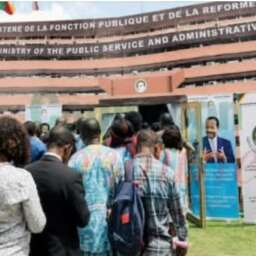
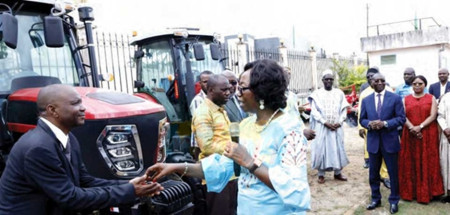
On March 31 in Yaoundé, the Ministry of Economy, Planning and Regional Development (MINEPAT) handed over the equipment to agricultural organisations operating in Ntui and Nkolmetet. The initiative aims to accelerate private sector-led production and processing, increase output volumes, and improve productivity in key staple crops. It aligns with national efforts to modernise farming practices, reduce labour intensity, and expand agro-industrial capacity.
In Ntui, in the Mbam and Kim Division, the agropole received an 80-horsepower tractor to complement two previously allocated tractor kits. With 120 hectares already developed, the site is expected to scale up maize production from 274 tonnes to 1,650 tonnes annually.
In Nkolmetet, in the Nyong and So’o Division, the agropole—already active in cassava production—received two tractors of 100 and 80 horsepower, equipped with a plough, sprayer and ridger. With 20 hectares developed, output is projected to rise from 600 to 800 tonnes per year, alongside expanded processing into cassava sticks, starch and bread-grade flour.
MINEPAT Inspector General Jaël Christine Mbamband said the government expects the equipment to translate into measurable production gains and support the transition towards semi-mechanised, intensive farming systems. The distribution forms part of a broader strategy to strengthen agricultural value chains by linking production with processing and market supply.
“These machines are an additional support to everything we already receive from the government. These tractors will enable us to move from traditional agriculture to semi-mechanised intensive farming. We will improve our yields and even our productivity,” said Célestin Lucien Ndzana, a beneficiary and agropole official.
Beyond output gains, the tractors are expected to ease operational constraints, improve efficiency in land preparation and cultivation, and increase the sector’s attractiveness to younger workers and women. By strengthening mechanisation capacity, authorities aim to address structural bottlenecks in agricultural production while supporting downstream industries reliant on maize and cassava derivatives.
The programme highlights the economic importance of agricultural transformation in Cameroon, where increasing domestic production and processing capacity remains central to reducing import dependence, stabilising food supply chains, and supporting rural economic activity.
Mercy Fosoh

