





















- U.S. and Australia express interest in Cameroon’s mineral potential
- Focus on cobalt, nickel, manganese, rutile, and scandium
- Regulatory clarity and business climate seen as key to attracting investors
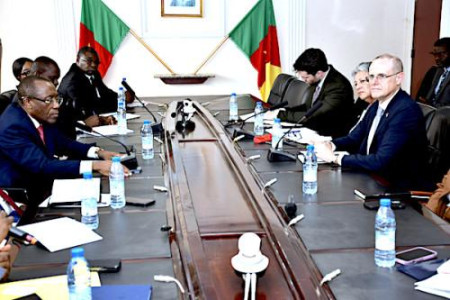
The United States is stepping up signals of interest in Cameroon’s critical minerals. On March 30, the U.S. chargé d’affaires in Yaoundé met with Cameroon’s acting minister of Mines, Industry, and Technological Development, accompanied by Australia’s high commissioner based in Abuja, according to a government statement.
Both representatives highlighted the growing importance of critical minerals in the global economy and expressed interest in supporting Cameroon’s efforts to develop its mining sector in a responsible and sustainable way.
The visit comes amid rising global competition for strategic minerals, which are essential for industries such as energy, manufacturing, and defense. In recent years, the United States has sought to diversify its supply sources in response to shifting geopolitical dynamics.
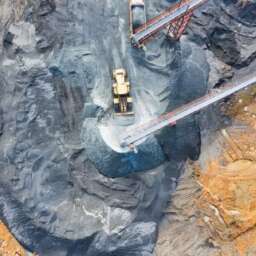
In Cameroon, interest is centered on cobalt, nickel, manganese, rutile, and scandium. Government data show that the Nkamouna-Lomié deposit in the East region holds an estimated 100 million tons of ore, with grades of 0.2% cobalt, 0.72% nickel, and 3.71% manganese.
The site’s annual production potential is estimated at 4,160 tons of cobalt, 3,280 tons of nickel, 450,000 tons of manganese, and 4,000 tons of scandium.
Beyond this deposit, authorities have identified 27 additional nickel occurrences in iron-rich formations across the South and East regions, along with five cobalt prospects, including in Ngoïla and Mbalam.
Following the March 30 meeting, Cameroon’s acting mines minister said the United States and Australia reaffirmed their commitment to capacity building, technical support, and skills transfer to strengthen the sector. Both partners also emphasized the need for a stronger legal and regulatory framework to attract more foreign investment.
The issue of the business environment had already been raised days earlier. On March 26, during a trade event hosted in Yaoundé by the American Chamber of Commerce, U.S. chargé d’affaires John G. Robinson pointed to regulatory clarity and the broader investment climate as key concerns.
He noted that American companies face difficulties navigating the local framework. Access to information, he said, remains limited for firms considering investments in mining or critical minerals. Questions around procedures, services, and overall business conditions remain unresolved.
These signals reflect growing U.S. interest in Cameroon’s mining potential. They also underscore that stronger foreign investment will depend on clearer regulations and improvements in the overall business environment.
Ludovic Amara

