





























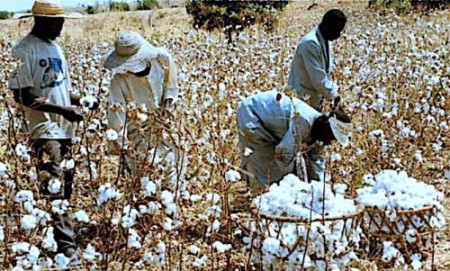
Cameroon’s cotton sector has faced a sharp deterioration in production conditions since 2023, driven by the combined effects of climate disruptions and pest outbreaks.
Speaking on March 31, 2026, in Garoua, Sodecoton’s director of agricultural production, Nadama, identified two main pressures weighing on the sector: heavy rainfall causing flooding in production zones between August and September, and the spread of cotton jassids, a pest that directly damages crops.
According to Sodecoton, the jassid threat is particularly severe. The pest had previously devastated cotton production in parts of West Africa, and controlling it remains costly, limiting the response capacity of less-capitalized farmers.
The combined impact of these shocks is already visible. Between 2023 and 2025, cultivated areas declined from 234,000 hectares to 197,000 hectares. In 2024 alone, 11,000 hectares were completely destroyed, while 17,000 hectares were partially affected by jassid attacks.
Productivity has also declined. Average yields fell from 1,600 kilograms per hectare to 1,300 kg/ha. As a result, the sector is now losing more than CFA10 billion in revenue each year.
This deterioration is also affecting farm financing. Sodecoton reports that unpaid agricultural credit has reached CFA2 billion, as many farmers struggle to repay loans taken at the start of the season. Some have abandoned cotton production altogether.
Output targets remain ambitious
Despite these challenges, Sodecoton is maintaining its growth strategy. By improving control of pest risks, the company aims to raise seed cotton production to 440,000 tons in 2026, up from a peak of 394,000 tons recorded during the 2023–2024 season.
The company, which is 89% state-owned, expects production to continue rising to 600,000 tons by the 2029–2030 season, in line with Cameroon’s National Development Strategy (SND30).
However, achieving this trajectory will depend on managing climate risks, containing pest outbreaks, and stabilizing farmer incomes. In practice, the sector’s recovery will hinge less on targets than on its ability to secure production conditions over time.
Brice R. Mbodiam

