















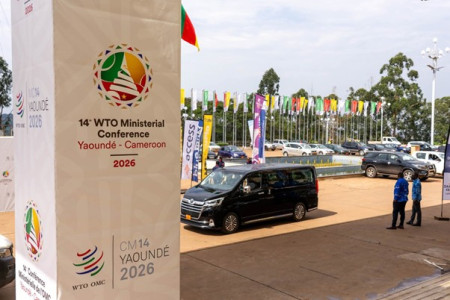
On Thursday, March 26, trade ministers from the WTO’s 166 member economies will meet in Yaoundé for the organisation’s 14th Ministerial Conference (MC14), with discussions set to cover digital commerce, development, cotton, fisheries and reform of a multilateral trading system many members say no longer reflects current global realities.
WTO Director-General Ngozi Okonjo-Iweala arrived in Yaoundé on Sunday, March 22, ahead of the four-day meeting, which runs through March 29 at the Yaoundé Conference Centre. A draft Yaoundé Ministerial Statement and Work Plan is under consideration, with outcomes expected to shape global trade governance in the coming years.
“Reform isn’t optional, it’s urgent,” said Norwegian Ambassador Petter Ølberg, a key figure in the reform debate in Geneva. “Reform isn’t calling, it’s ringing off the hook.”
A trading system under pressure
Ølberg said the WTO, founded in 1995 as the cornerstone of rules-based trade, now faces a global economy reshaped by technology, shifting geopolitical alignments, the rise of digital services and crises that exposed structural weaknesses in existing rules.
Reform discussions gained traction at MC12 in 2022 and MC13 in 2023, but progress has lagged behind global economic changes.
“The world has changed. The WTO cannot stand still. Modernise outdated rules, fix systemic imbalances, build a trading system that is fairer, more inclusive and more resilient,” Ølberg said.
WTO official Joan Apecu noted that ministerial conferences are the organisation’s highest decision-making body, where binding decisions across multilateral agreements are taken and new ones can be negotiated.
Past conferences have produced outcomes with lasting economic impact, including the 2013 Trade Facilitation Agreement, the 2022 Agreement on Fisheries Subsidies and the Information Technology Agreement launched in Singapore and expanded in Nairobi.
“The seafood on your plate, faster customs procedures for your overseas package, cheaper IT goods in many markets, these have all been made possible by decisions made at a WTO ministerial conference,” Apecu said.
Digital trade without global rules
The expansion of the digital economy has highlighted the absence of multilateral rules governing digital trade, a key issue on the MC14 agenda.
According to Ambassador Richard Brown, the WTO facilitator on electronic commerce, digitally delivered services including financial transactions, business software and IT solutions now exceed $4.6 trillion globally, close to a quarter of international trade. He added that artificial intelligence is accelerating this transformation.
“Digital trade is reshaping the global economy at incredible speed. Governments must put in place the right policies, upgrade their digital infrastructure and support the development of relevant talent and skills,” Brown said.
A central unresolved issue is the moratorium on customs duties on electronic transmissions, which has implications for revenue and competitiveness across developed and developing economies. Positions remain divided, though Brown noted a willingness among members to engage.
“I’m encouraged by the willingness I see to find common ground. The fact that members are at the table engaging seriously is itself a meaningful signal,” he said.
Development at the centre of negotiations
For developing and least-developed countries, a key priority is ensuring that trade rules are effectively implemented.
“Development is a cross-cutting issue and should remain at the heart of the WTO’s work,” said Ambassador Kadra Hassan, chair of the Committee on Trade and Development in Special Session.
Discussions have focused on Special and Differential Treatment provisions, which allow lower-income members to integrate into global trade according to their capacities. Ministers at MC13 called for these provisions to be made more precise and operational, with progress reported in areas including sanitary and phytosanitary standards, technical barriers to trade and technology transfer under the TRIPS agreement.
“I believe that with progress made so far, supported by existing flexibilities and genuine engagement of members, we can deliver on a meaningful development outcome at MC14,” Hassan said.
Cotton as a test case
Ahead of the conference, a high-level meeting on the cotton partnership is scheduled for March 25, bringing together Okonjo-Iweala, International Trade Centre Executive Director Pamela Coke-Hamilton and UNIDO Director-General Günther Beger.
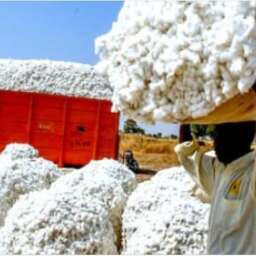
Cotton remains one of the commodities most affected by distortions in global trade rules and has long been a concern for African producers, making it an early test of whether MC14 can translate development commitments into concrete outcomes.
A defining moment
Ølberg said the Yaoundé meeting could mark a turning point for the organisation.
“Let Yaoundé be a milestone, launching reforms that help the WTO deliver for everyone,” he said.
What ministers agree over the coming days will determine whether that ambition is realised.
Mercy Fosoh
