

























The Cemac Commission is developing a system to collect data on informal cross-border trade, seeking to improve the accuracy of trade statistics across Central Africa.
As part of this effort, a regional workshop is being held in Douala from March 16 to 19, 2026. The meeting aims to train national experts on data collection tools and monographic studies designed to identify border crossing points, map trade flows, and estimate informal import and export transactions.
Around 50 participants are attending, including representatives from national statistics institutes, customs administrations, and trade ministries from the six Cemac countries.
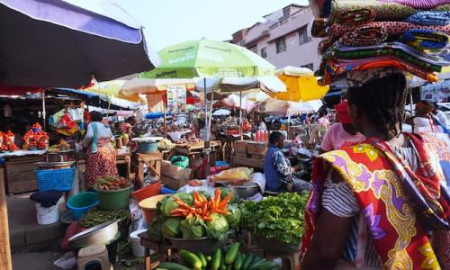
Informal cross-border trade remains a significant but poorly documented part of regional commerce. According to Marc Roland Lontchi, director of statistics at the Cemac Commission, much of the activity of small traders takes place through land routes, making it difficult to capture in official data.
“We need to gather this information to understand the flows and design policies to support these actors,” he said.
The lack of reliable data complicates efforts to assess the true level of economic integration and the evolution of trade within the subregion. By introducing a harmonized monitoring system, Cemac aims to address this information gap and improve the design of policies targeting small cross-border traders.
Cameroon faces particularly high exposure to informal trade due to its 4,591 kilometers of shared land borders and the porous nature of many crossing points. Limited customs capacity further contributes to the scale of unrecorded exchanges.
Data from Cameroon’s National Institute of Statistics show that informal cross-border trade produced a deficit of CFA50.72 billion in 2024 in the country’s exchanges with its neighbors.
For authorities in Yaoundé, the issue goes beyond improving data quality. It also involves gaining a clearer picture of real trade balances, managing cross-border flows more effectively, and better assessing income generated in border regions.
Under its National Development Strategy 2030 (SND30), Cameroon views control of these flows as a strategic priority. The country has also signaled its willingness to support other Cemac members in setting up similar monitoring systems. “We are ready to assist other countries in implementing a tracking system,” said Christelle Tchoua, representing Cameroon’s statistics institute.
Beyond statistics, the initiative also carries budget implications. Better measurement of informal trade could help governments refine external trade data and improve estimates of national wealth in a region where public finances remain under pressure.
More broadly, the system is intended to provide governments with a stronger tool to guide trade policy, support small traders, and enhance border management.
Frédéric Nonos
