























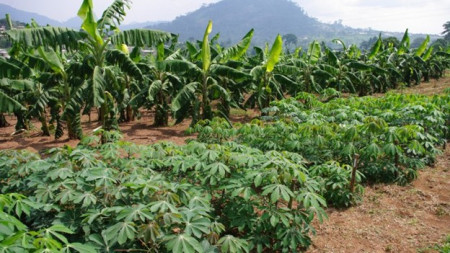
Cameroon launched its 2026 agricultural season on March 13 in Bamougoum, as authorities seek to boost domestic production and reduce reliance on imports.
The Minister of Agriculture and Rural Development, Gabriel Mbaïrobe, presided over the ceremony marking the start of activities in the southern zone, as heavy rains signalled the onset of the season. The event brought together farmers’ cooperatives, administrative authorities, development partners and regional officials.
The launch also provided an opportunity to review the 2025 agricultural year, which was marked by contrasting climatic conditions that disrupted output across several production basins. These weather shocks, combined with economic constraints, weighed on the performance of multiple value chains, the minister said.
Against this backdrop, the government is positioning 2026 as a consolidation year, with a focus on increasing productivity and accelerating structural transformation in the sector. The strategy also prioritises the modernisation of production systems, professionalisation of farmers, and the distribution of improved seeds and processing equipment.
Production targets have been set across key commodities, including 400,000 tonnes of rice and an additional 40,000 tonnes of palm oil. Seed production is also being scaled up, with plans to develop 500 hectares and 2,000 hectares of seed fields in the Yoko and Mbam and Kim basins, respectively.
“These efforts aim to operationalise the import-substitution policy initiated in 2023,” Mbaïrobe said, adding that the country expects tangible results, particularly in rice production, by the end of the current plan.
The measures are aligned with the National Development Strategy (NDS30), currently at its midpoint, and are intended to strengthen food security while supporting agro-industrial growth. Authorities also expect progress in the digitalisation of agriculture in 2026, alongside the launch of the “Central Plain” project aimed at promoting medium- and large-scale farming and attracting private investment.
Mechanisation efforts will be intensified across the production cycle, from land preparation to post-harvest operations, according to the National Centre for the Study and Experimentation of Agricultural Machinery. Authorities are deploying tractors, harvesters and processing equipment to support farmers.
Local producers also reported improved access to inputs, including fertilisers and phytosanitary products, which they expect will support higher yields during the current season.
Mercy Fosoh

