





















Cameroon has taken a step towards industrialising its coffee sector with the inauguration of a 1.05 billion CFA franc roasting unit in Bafoussam.
The Minister of Agriculture and Rural Development, Gabriel Mbaïrobé, inaugurated the facility on Thursday, March 12, 2026, during a working visit to the West Region. Located at the headquarters of the Central Union of Western Agricultural Cooperatives (UCCAO), officials say the unit marks a move to increase local processing and capture more value from the country’s coffee production.
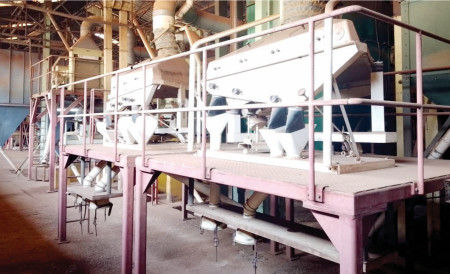
The roasting facility, described as a complete processing chain, was funded through a public-private arrangement. The state contributed 700 million CFA francs while UCCAO provided 350 million CFA francs from its own resources, bringing the total investment to 1.05 billion CFA francs. To ensure uninterrupted production despite power supply uncertainties, the installation includes a 400 kVA generator and an 11-kW compressor.
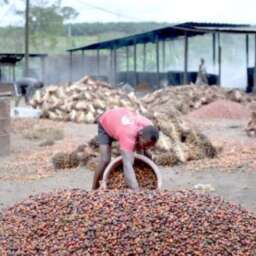
Before cutting the ribbon, the minister distributed rolling stock and agricultural kits to farmers and phytosanitary brigades across several communes under the Coffee Sector Revitalisation Support Project (PAREF-Café). The distribution targets declining farm productivity, identified as a structural weakness in the sector.
Mbaïrobé also announced plans to reorganise producers, rejuvenate ageing plantations and introduce plant material resilient to climate change.
“The coffee sector has bright days ahead. We will strengthen this momentum through the reorganisation of producers, the rejuvenation of plantations and the use of plant material resistant to climate change,” he said.
Stakeholders announce instant coffee unit
The inauguration comes with a declared government roadmap beyond ground coffee. Authorities officially announced plans to establish an instant coffee production unit in the West Region, a move aimed at penetrating both the domestic market and international markets with a consumer-ready finished product.
Mbaïrobé framed the investment as part of a broader national strategy to add value locally to what he called Cameroon’s “green gold”, rather than exporting it unprocessed. Officials say the objective is to supply both domestic consumers and international markets with finished Cameroonian coffee products instead of raw beans.
According to authorities, the roasting unit represents a shift in Cameroon’s coffee value chain strategy. The country has historically exported raw coffee beans, foregoing the premium associated with processed and branded products.
The UCCAO facility represents the largest technical upgrade in the cooperative’s nearly seven decades of operation, reflecting a renewed effort to modernise Cameroon’s coffee industry and strengthen its position in higher-value segments of the global market.
Mercy Fosoh

