




























Cameroonian shipping company Gulfcam plans to acquire six vessels to expand coastal shipping operations between the ports of Kribi and Douala, as it seeks to strengthen container transport along Cameroon’s main maritime corridor.
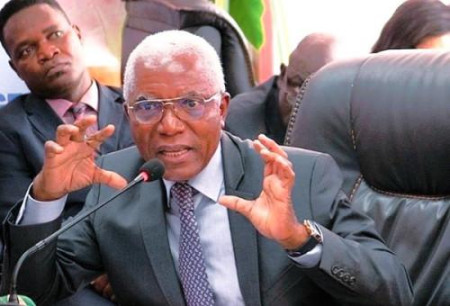
The announcement was made on March 6, 2026, in Douala by Jean Perrial Nyodog, president of Gulfcam.
The company aims to transport around 50% of the freight moving between the two cities, which currently travels more than 60% by road, often along deteriorated routes that increase security risks and lengthen transit times.
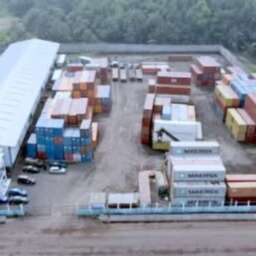
Coastal shipping is expected to help bypass these road constraints while also serving large vessels that cannot access the river port of Douala, where limited draft prevents their entry.
Under this model, large ships would unload their cargo at Kribi’s deep-water port, with goods then transported to Douala using smaller vessels.
Service restart after pandemic disruption
To relaunch the service—previously operated between 2020 and 2022 before being suspended during the Covid-19 pandemic—Gulfcam has chartered the Atlantic Runner II, a cargo vessel with a capacity of 1,100 twenty-foot equivalent units (TEUs).
The 180-meter ship, equipped with four onboard cranes, carries a crew of 25 and operates at a speed of 18 knots. It has been stationed at Kribi port since February 27 and is expected to begin operations this week.
According to Gulfcam, the service will operate through two main logistics offerings.
The first will focus on domestic coastal shipping, transporting containers cleared in Kribi as well as goods from local industries destined for Douala and neighboring countries.
The second will handle transshipment through the Kribi hub, redistributing containers nationally, regionally, and internationally. The company hopes the system will help strengthen Kribi’s role as a subregional logistics hub.
This dual approach is designed to maximize operational flexibility and optimize container flows between Kribi and Douala in both directions.
Operations will be based on a 10-day round-trip rotation, with at least three port calls per month, targeting about 2,000 TEUs per voyage, including both full and empty containers.
Positioning in a strategic logistics sector
By relaunching cabotage services, Gulfcam aims to offer a safer and more environmentally friendly alternative to road transport as logistics challenges intensify.
The company was formed in 2021 through the merger of Gulfin, an oil transport firm, and Camship-CLGG, a coastal shipping operator.
Through this initiative, Gulfcam is pursuing both financial and strategic goals: increasing revenues and tax contributions while strengthening its position as Cameroon’s leading national shipping operator in a sector largely dominated by foreign companies.
Frédéric Nonos

