




















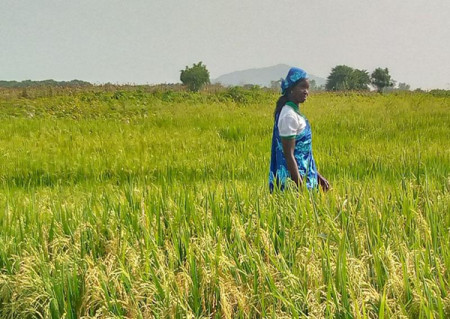
Cameroon has signed a €150-million (about 98 billion XAF) agreement with Israeli agribusiness firm Ekobell to develop three large-scale rice production and processing agro-poles in the country’s northern regions, part of a strategy to reduce dependence on rice imports.
The agro-poles will be located in Sirdjam and Pola in the North Region and Mbé in the Adamawa Region. They are expected to strengthen domestic processing capacity while supporting the expansion of rice-growing zones in northern Cameroon.
The programme aims to develop 10,000 hectares of high-yield rain-fed rice cultivation over three years, targeting an additional 46,700 tonnes of paddy rice production, equivalent to about 31,289 tonnes of milled rice. This could represent an 18% increase in Cameroon’s output of high-quality white rice, strengthening the supply of a staple food widely consumed across the country, according to project estimates.
For Ekobell, the project is backed by a guarantee from the Israeli government’s export credit agency, alongside financing arrangements from its financial partner. It is projected to generate around 40,000 direct and indirect jobs, including approximately 8,000 rice farmers who will participate in cultivation activities linked to the agro-poles.
Agricultural support centres
Authorities say the programme is based on studies conducted by the Food and Agriculture Organization of the United Nations (FAO) and financed by the African Development Bank, under a project aimed at improving the use of water resources for agro-pastoral and fisheries activities in the Far North.
One of its key components is the establishment of Agricultural Support Centres (ASC) designed to improve productivity and profitability for family farms. These centres will provide mechanisation services, agronomic guidance, access to certified agricultural inputs, and drying and storage facilities to help reduce post-harvest losses. They will also act as buyers of paddy rice for processing, creating a guaranteed market outlet for farmers and helping stabilise their incomes against market price fluctuations.
The programme will also introduce mechanised equipment such as power tillers, mini-harvesters, threshers and rice milling machines to modernise production methods and increase yields in participating farming areas.
Government pushes for rice self-sufficiency
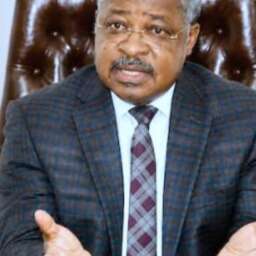
Agriculture and Rural Development Minister Gabriel Mbairobe described the contract as an important step toward strengthening domestic rice production capacity.
“The implementation of this important project requires appropriate institutional support and the signing of this contract marks a decisive step for its implementation. Sectoral administrations are expected to provide adequate support. The Ministry of the Economy, Planning and Regional Development will in the coming days begin discussions on the financing conditions,” he said.
He added that the initiative forms part of broader efforts to achieve national rice self-sufficiency. “By 2030, no milled rice grain should enter the national territory.”
Technology transfer and training
Ekobell Director General Idan Pinhas said the project will combine improved seeds, mechanised agriculture and modern cultivation techniques to raise productivity in Cameroon’s rice sector.
“The production of quality seeds and the implementation of mechanised agriculture and modern cultivation methods will improve yields, and we anticipate productivity of four to five tonnes per hectare,” he said.
He added that the programme includes a training and technology-transfer component aimed at enabling Cameroonian personnel to manage the project once it is transferred to the state.
“Ekobell will train the staff dedicated to the project so that they will later be able to manage it when it is transferred to the State.”
By Mercy Fosoh
Editing: Mouka Mezonlin

