






























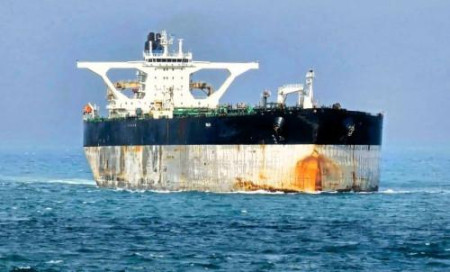
Cameroon’s government tackled a diplomatically sensitive issue on Friday, addressing the registration of vessels identified as part of a “shadow fleet” accused of evading international sanctions on Russian oil.
Prime Minister Joseph Dion Ngute convened a meeting at his office with relevant government departments, including the Transport and Fisheries ministries.
According to correspondence from the Prime Minister’s Office reviewed by Investir au Cameroun, the meeting focused on “the registration in Cameroonian maritime registers of vessels identified as belonging to the ‘shadow fleet.'” Secretary General Séraphin Magloire Fouda stated the agenda aimed at “identifying and eliminating factors that allow vessels identified as part of the ‘shadow fleet’ used to circumvent international sanctions to register under the Cameroonian maritime flag.”
Since 2023, Yaounde has faced accusations of enabling the sale of sanctioned Russian oil via Cameroonian-flagged vessels, amid Russia’s February 2022 invasion of Ukraine and Western, particularly European, efforts to cut off Moscow’s crude oil revenues. The pressure, according to reports, comes from Brussels.
The Feb. 6 meeting followed correspondence from Cameroon’s ambassador to Brussels dated Feb. 4, which cited European “concerns” about the number of Cameroonian-flagged vessels incorporated into the “shadow fleet,” as Western capitals intensify surveillance of these vessels worldwide.
Government proposes suspension and deregistration
In response, the government said it examined an “immediate suspension of all new registrations of vessels identified as part of the ‘shadow fleet'” and a “rapid deregistration of vessels already registered.” The vessels in question operate primarily outside Cameroonian territorial waters. The Secretary General also mentioned “additional measures that could be taken to address our international partners’ concerns.“
Hours later, Transport Minister Jean Ernest Massena Ngalle Bibehe, whose department issues registrations, blamed cyber fraud. In a Feb. 6 statement, he said that “following ongoing verification of the maritime register, several cases of fraudulent registrations carried out using unauthorized applications have been detected,” adding that “the government condemns this fraudulent use of the flag and denies all responsibility for these illegal acts.”
This defense, however, is contradicted by internal evidence cited in the matter. A government list reviewed by Business in Cameroon identifies more than 200 Cameroonian-flagged vessels officially registered by the Transport Ministry in the ports of Douala, Kribi and Limbe. Yet several Cameroonian-flagged vessels have been seized in recent months for illegal fishing, cocaine trafficking or their alleged involvement in the Russian oil “shadow fleet.” In most cases, they were among officially registered vessels.
Reputational risks mount
The issue took on additional diplomatic weight in December 2025, when the Ukrainian president sanctioned three Cameroonian-flagged vessels belonging to this “shadow fleet.” This is not without precedent: in 2023, Cameroon had already conducted a registry purge following a “red card” from the European Union for illegal fishing. In 2024, the Transport Ministry announced the digitalization of vessel registration.
Beyond the Russian case, the issue has become structural. The flag is no longer just an administrative tool; it involves international compliance, diplomatic credibility and the country’s reputational risk. If the announced suspensions and deregistrations are not translated into traceable and verifiable measures, Cameroon could face tighter European scrutiny and increased skepticism toward its maritime register, with potential effects on the flag’s attractiveness and operating costs for shipowners.
Ludovic Amara

