

















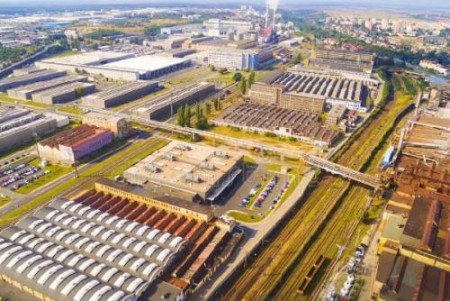
Cameroon has launched consultations to develop tailor-made special economic zones in selected municipalities across five regions, as part of efforts to deepen industrialization through decentralization.
On February 5, 2026, in Yaoundé, the Mission for the Development and Management of Industrial Zones (Magzi) and the United Nations Economic Commission for Africa (UNECA), working with the United Councils and Cities of Cameroon (CVUC), opened discussions on the establishment of customized special economic zones in the Center, Littoral, East, South, and West regions.
According to the CVUC, the consultations are structured around four operational pillars. The first focuses on defining, for each municipality, an industrial zone model aligned with its specific resources. The second pillar addresses the transfer of skills and economic benefits to local governments, with the aim of ensuring that municipalities become active participants in production rather than passive host territories.
With UNECA’s technical support, a third component seeks to identify the industrial segments considered most profitable for local populations, with the stated objective of maximizing job creation. Finally, Magzi and the CVUC are coordinating the technical identification of land to ensure that selected sites are viable and free of legal disputes.
The consultations follow a partnership agreement signed in June 2025 between Magzi and the CVUC during the International Economic Days of Municipalities, which formalized this cooperation framework. The initiative is aligned with Cameroon’s National Development Strategy 2020–2030, which places decentralization at the center of efforts to drive industrial growth.
Under this framework, Magzi plans to develop more than 6,700 hectares nationwide. Sites already identified include Edéa in the Littoral region and Bertoua in the East, with a focus on wood processing and other value-added sectors. A 100-hectare development project is under way in Meyomessala in the South, as well as in the Nsam-Mvan area of Yaoundé in the Center region, covering about 316 hectares.
The initiative builds on recent partnership and investment announcements. In January 2026, Magzi signed a $768 million agreement, or about CFA433 billion, with UAE-based SGC Investment to develop the Bertoua wood industrial park, covering 904 hectares and valued at CFA430 billion, and the Nomayos logistics base in Yaoundé, spanning 2 hectares with an investment of CFA3 billion.
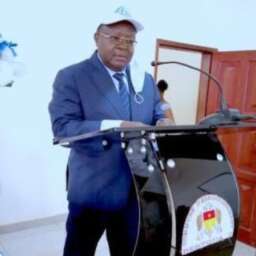
According to Magzi, the goal of this land expansion is to shift from centralized management to a denser territorial network that delivers direct benefits to local governments. CVUC national president Augustin Tamba said 2026 marks the transition from planning to concrete on-the-ground implementation, with the first major development works expected to begin in pilot municipalities.
Frédéric Nonos

