






















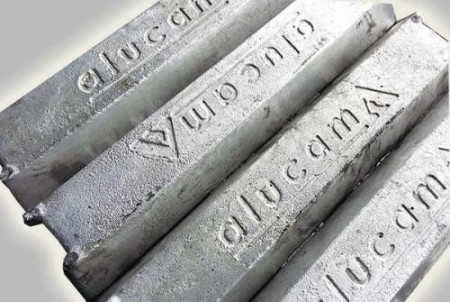
Cameroon has received a new offer to acquire the assets of the Cameroon Aluminum Company (Alucam), according to a confidential note seen by Business inn Cameroon. The proposal, submitted to the Prime Minister’s Office on December 30, 2025, comes from Naxya Holding.
Naxya Holding is the parent company of Proalu SA, which is currently building a CFA88 billion aluminum processing plant in Douala, Cameroon’s economic capital. In its submission, the group frames its proposal as part of a restructuring and modernization plan built around value-chain integration and access to the African continental market.
In the document, Naxya Holding recalls its earlier expression of interest dated June 5, 2024, initially linked to negotiations over raw material supply synergies between Alucam and Proalu. The group now proposes what it describes as a “strategic and capital partnership” with the Cameroonian state, aimed at transforming Alucam into a regional industrial anchor across the bauxite–alumina–aluminum value chain, with a focus on serving the African Continental Free Trade Area.
While Naxya Holding does not specify the size of the equity stake it seeks to acquire, it says it is prepared to inject CFA100 billion into Alucam. The group advocates a mixed shareholding structure with the public sector, which it argues is necessary to ensure strategic and operational efficiency in line with Cameroon’s industrial policy.
Investor interest revives after a decade
To support its bid, Naxya Holding highlights the existing commercial relationship between its subsidiary and Alucam. Proalu has already provided Alucam with a CFA10 billion cash advance to help restart operations, backed by a product supply guarantee. The group also commits to a minimum annual offtake of more than CFA48 billion.
Since August 13, 2024, Proalu and Alucam have been bound by a commercial agreement under which Proalu purchases 2,500 tons of aluminum per month from Alucam. This represents monthly revenues of about CFA4 billion, or CFA48 billion per year. The contract also includes a CFA10 billion liquidity facility, which Proalu can activate if needed.
That facility was drawn in 2024, providing Alucam with immediate cash support. The mechanism secured part of the company’s annual revenue and improved liquidity at a time when Alucam struggled to attract investors.
The agreement appears to have renewed investor interest in Alucam, which had failed to secure a strategic partner since mining group Rio Tinto exited its shareholding in 2014. Despite a government-led process launched in 2015 to recruit an investment bank to help find a partner, it took nearly a decade—and the Proalu deal—for Cameroon’s only aluminum producer to regain attention from potential buyers.
A company weakened by years of losses
In 2025 alone, three investors submitted takeover offers for Alucam’s assets. Before Naxya Holding, Singapore-registered investment vehicle Eagle Eye, owned by India’s Arise IIP group, expressed interest in acquiring 70% of Alucam. Swiss commodities trader Bathco has put forward a more ambitious proposal, seeking an 80% stake for an investment estimated at more than CFA78 billion.
The government must now arbitrate between these competing offers against the backdrop of Alucam’s fragile financial position. The company has posted losses for more than a decade, including CFA23.7 billion in 2024, CFA23.6 billion in 2023, CFA8 billion in 2022, CFA14 billion in 2020, and CFA23 billion in 2019. Public finances have also been repeatedly called upon to cover electricity bills, according to official documents.
A November 2024 audit by the Audit Bench of Cameroon’s Supreme Court estimated that Alucam requires a CFA43 billion recapitalization to upgrade its smelting facilities and restore annual primary aluminum output to between 110,000 and 120,000 tons. Naxya Holding’s proposal aligns with that production target and emphasizes that its plan would not require direct capital injections from the state.
Brice R. Mbodiam

