


















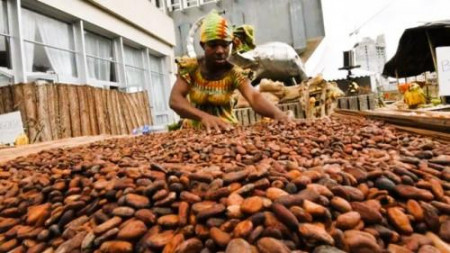
Land insecurity among women cocoa producers and low awareness of the EU deforestation regulation are emerging as major risks for Cameroon’s access to the European cocoa market.
A field study conducted in ten localities across three regions shows that 87% of women cocoa producers operate under insecure land tenure, while 68% say they have never heard of the EU Regulation on Deforestation and Forest Degradation (RDUE). These two weaknesses could, in the short term, prevent thousands of family farms from continuing to export cocoa to Europe.
The findings were presented at a strategic workshop and policy dialogue held in Yaoundé on January 28–29. The meeting was organized by the Centre for the Environment and Development, in partnership with the Making Europe Work for People and Forests platform, and brought together technical and institutional partners, including the European Union and German cooperation agencies, as well as civil society groups, traditional authorities, banks, and cocoa sector stakeholders. The discussions come as the entry into force of the RDUE has once again been postponed.
“As the regulation draws closer, questions from small producers are multiplying,” said CED Secretary General Samuel Nguiffo. “Many are wondering whether they will still be able to sell their cocoa. These are legitimate concerns that grow as the debate advances and the implications become clearer.”
He said the focus on smallholders was deliberate. Cameroon has around 600,000 small cocoa producers, who account for the bulk of national output. Many of them remain poorly informed and largely excluded from decision-making, even though they are the most exposed to the effects of the new rules.
Persistent land insecurity
The study highlights land tenure as the most critical issue, particularly for women. In the areas surveyed, only 13% of women producers hold formal land titles, while 38% farm land without any legal documentation. In total, 87% are considered to be in a situation of land insecurity.
Yet the RDUE requires proof of legal land ownership or use rights for cocoa-producing plots. Participants warned that a strict application of this requirement could automatically exclude large numbers of family farms. The study notes that applying the regulation without adjustment could deepen existing inequalities rather than reduce them.
Limited awareness of RDUE
A second major finding concerns information gaps. Awareness of the RDUE remains very low in cocoa-growing areas. Nearly seven out of ten women surveyed said they had never heard of the regulation. Those with some knowledge often associate it only with bans on tree cutting, without understanding its broader requirements on traceability, geolocation, and risk management.
As a result, the RDUE is widely seen as a distant and abstract policy, rarely explained at the plantation level and poorly understood by producers.
Women and indigenous communities left behind
The study also points to broader issues of social and economic inclusion. Although women play a central role in cocoa production, from plantation maintenance to harvesting and processing, they typically control only 20% to 30% of the income generated. Investment decisions and access to cooperatives remain largely dominated by men.
The situation is described as even more difficult for indigenous women, particularly from Baka communities, who often occupy the lowest rungs of the rural economic hierarchy.
Small producers do not reject the RDUE but want it to become a lever for transforming the cocoa sector rather than a source of exclusion. The workshop produced several advocacy priorities, including stronger producer support, improved rural communication, greater use of agricultural research, promotion of women-led cocoa farming, a shift toward sustainable practices, and increased support for local processing.
Participants argued that, with adequate support, the regulation could help modernize farms, improve cocoa quality, and strengthen Cameroon’s position on the European market. The study calls for coordinated action by all stakeholders and a strong role for the Cameroonian state, which is engaged in land and tenure reforms, to ensure that the RDUE becomes a tool for economic, social, and environmental sustainability rather than a barrier for the country’s cocoa sector.
Amina Malloum

