
































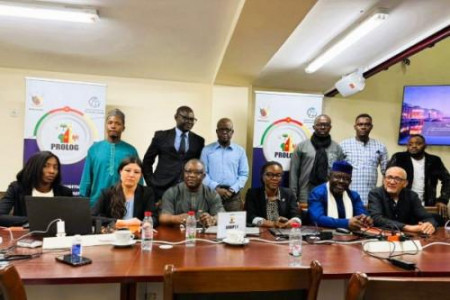
A World Bank midterm review mission of the Local Governance and Resilient Communities Project (Prolog) is taking place from February 2 to 6, 2026. According to a letter sent on January 20, 2026 by the World Bank’s division director for West and Central Africa to Cameroon’s Minister of Economy, Alamine Ousmane Mey, and seen by Business in Cameroon, the review is intended to “finalize the restructuring requested by the Cameroonian government (…) as well as the partial reprogramming of priority activities in Cameroon.”
A 50% cut, but not necessarily a loss
At the core of the proposed restructuring is the withdrawal of CFA90 billion, equivalent to $150 million initially earmarked for Prolog. Set against the total announced envelope of CFA180 billion, or $300 million, the move represents a 50% reduction in project financing.
From the World Bank’s perspective, the rationale is primarily technical. When disbursements remain persistently low, the institution often favors reallocating funds to programs with a stronger capacity to absorb resources, rather than keeping undisbursed credits that could ultimately be canceled at project closing.
This distinction is central to the document reviewed by Business in Cameroon. The Cameroonian government reportedly requested that the amounts withdrawn from Prolog be redirected toward other priorities. The World Bank said it was open to this option, provided the reprogramming remains consistent with the country’s development objectives.
Disbursements deemed too weak to meet deadlines
According to project documents, Prolog aims to improve community access to climate-resilient infrastructure and strengthen local capacities in resource management and service delivery. Financial execution, however, has emerged as the main point of tension.
Figures cited by Business in Caneroon show that about 9% of allocated funds had been disbursed as of November 30, 2025, despite operational implementation having started in March 2024. This corresponds to CFA15.8 billion disbursed out of a total envelope of about CFA180 billion. Based on these figures, the World Bank considers that the current pace would not allow the remaining resources to be absorbed before the project’s scheduled closing in September 2027.
Financial underperformance is compounded by weak results indicators. The article reports that eight out of nine performance indicators were rated unsatisfactory during the November 2025 assessment. The issues therefore extend beyond disbursement delays to include delivery of expected outputs, notably in procurement, works execution, deliverables, and monitoring.
What the February 2026 mission is expected to decide
The letter cited announces “an in-depth review” of overall performance to identify the measures required to achieve the development objective during the remaining period. The mission agenda includes a technical and financial review of component implementation, site checks, and analysis of the remaining procurement plan, disbursement projections, and cost consistency.
The stakes are twofold. First, to secure a realistic landing for Prolog by identifying what can still be delivered by 2027. Second, to ring-fence activities that would need to be financed outside the project through reprogramming.
Project management had already explained in August 2025 that delays were largely due to lengthy and complex procedures, particularly the “no-objection” processes required before certain contracts could be signed, according to the article. Coordination units also pointed to slow execution by some municipalities and regional authorities in signing agreements and mobilizing counterpart funds.
Analytically, these issues point to three common bottlenecks in investment projects. The first is procurement, where delays in planning and tender documents mechanically slow physical execution. The second is the absorption capacity of beneficiary entities, with decentralization multiplying actors and administrative choke points. The third is overly ambitious sequencing, when projects remain relevant on paper but become unrealistic if too many activities are launched simultaneously.
In this context, the restructuring is not framed solely as a sanction. It also aims to narrow the project’s scope to what is realistically executable, reprioritize activities, and align timelines with implementation capacity.
Prolog scope and timeline
Prolog is a five-year investment project financed at CFA180 billion and targeting six regions: Adamaoua, East, Far North, North, North-West, and South-West.
Over the project cycle, a World Bank monitoring note dated June 14, 2024 indicates that the project became effective in late April 2024. This confirms, based on the 2024 timeline, a delayed operational start relative to the design and approval phase, even though implementation is described as having begun in March 2024.
Ludovic Amara

