




















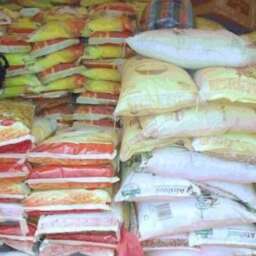












Cameroon’s refined salt market will avoid shortages in the coming weeks as two large shipments totalling 50,000 tonnes of raw salt are scheduled to arrive at the Douala Port, the Ministry of Trade announced.
The first vessel, MV PARAGON, from Brazil, carrying 25,000 tonnes of raw salt for local processing, was due to begin offloading on 28 January 2026. A second ship, also transporting 25,000 tonnes of raw salt from Namibia, is slated to arrive on 15 February 2026 to ensure a continuous flow of supply, the communiqué stated.
The Ministry’s release followed the Minister of Commerce, Luc Magloire Mbarga Atangana, questioning market operators about the status of the national salt supply. Operators reassured both public authorities and shoppers that any recent tightness in availability stemmed from temporary issues in international maritime transport rather than structural supply deficits.
According to trade statistics for 2023, Cameroon imported salt and pure sodium chloride valued at around $12.75 million, equivalent to roughly 218,861 tonnes of sea salt, with Brazil accounting for more than half of that volume.
Salt and related products are among the notable import categories for Cameroon within the broader merchandise trade profile. In 2024, products in the category “salt, sulphur, earth, stone, plaster, lime and cement” made up about 3.41 per cent of total imports by value, roughly $237 million, underscoring the commodity’s economic significance as a staple.
Market data suggests that across Africa, salt imports were resilient in 2024, with Cameroon ranked among the larger importers at an estimated 158,000 tonnes, reflecting ongoing reliance on foreign salt supplies to complement domestic output.
Operators informed the Ministry that they had provided full shipping documentation, including bills of lading and manifests, for the scheduled deliveries to reaffirm transparency and market confidence. The volumes of salt arriving over the next three weeks are expected to satisfy domestic demand and help maintain price stability for consumers as the refined product moves through local processing and distribution networks.
The Ministry of Trade’s statement emphasised that prior disruptions linked to global maritime freight capacity constraints, reflected in higher freight costs and fewer available vessels, have been mitigated through earlier planning and coordination with importers. With these shipments due shortly, the government and industry stakeholders anticipate that households across Cameroon will continue to have uninterrupted access to essential salt for culinary and other uses.
Mercy Fosoh

