
















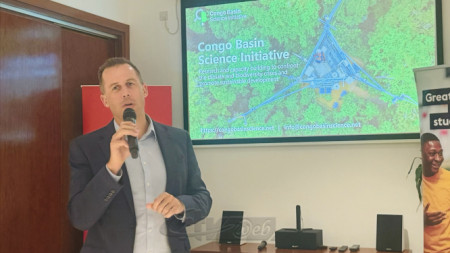
Nine Cameroonian students are part of the first cohort of scholars selected for UK-funded postgraduate research placements under the Congo Rainforest Alliance for Forest Training for Sustainable Development (CRAFT). The programme is a key component of the broader Congo Basin Science Initiative (CBSI), which seeks to strengthen scientific capacity to support forest conservation, climate resilience, and sustainable economic development across the Congo Basin.
With funding exceeding £9 million, CRAFT is the flagship capacity-building initiative under the CBSI. It will support 33 postgraduate researchers—21 PhD candidates and 12 Master’s students—from Cameroon, the Democratic Republic of the Congo, Gabon and the Republic of the Congo. The programme, financed by the UK International Development, will run from 2025 to 2030.
CRAFT brings together universities and research institutions in Central Africa and the United Kingdom to deepen scientific expertise across six thematic observatories: climate, water, vegetation, biodiversity, land use and socio-ecology. By strengthening locally led research in these areas, the initiative aims to generate robust data to inform policy, conservation strategies and sustainable land-use planning.
Beyond academic outcomes, the programme has significant economic implications. Improved scientific capacity is critical to unlocking forest-linked revenue opportunities and accessing climate-related financing. According to a 2025 World Bank report, the value of ecosystem services provided by Congo Basin forests nearly doubled from $590 billion in 2000 to $1.15 trillion in 2020. Over the same period, the total value of forest assets increased from $11.4 trillion to $23.2 trillion, underscoring the region’s vast natural capital.
Reliable data and locally driven research—such as that expected from CRAFT scholars—are essential for attracting investment in sustainable forest management, carbon markets, agroforestry value chains and ecosystem services. They also provide a foundation for Cameroon and neighbouring countries to mobilise climate finance and implement evidence-based policies to curb deforestation while supporting community livelihoods.
Policymakers involved in CRAFT and CBSI, alongside local communities and the Congo Basin Forest Partnership, have committed to ensuring that research outputs directly inform forest conservation strategies, climate resilience planning and sustainable development initiatives, including national policies and regional frameworks. Continued investment in scientific training is expected to strengthen the region’s capacity to engage with global climate finance mechanisms and to develop homegrown solutions to environmental and economic challenges.
The nine Cameroonian scholars were officially sent off at a ceremony held at the British Residence in Bastos, Yaoundé, presided over by the British High Commissioner to Cameroon, H.E. Matt Woods. The scholars will undertake Master’s and PhD research focused on the Congo Basin to support evidence-based policymaking and sustainable development in the region.
Among the beneficiaries, Chudap Mache Cherifa, a PhD candidate at the University of Yaoundé I, will conduct a three-year study titled “Congo Basin rainfall paradox: vertical profile of regional circulation over the Congo Basin.” Her research will be split between the United Kingdom and Cameroon. Another scholar, Kengni Makalla Jules Trevor, a Master of Science student at the University of Dschang, will examine the “Impact of trees in agroforestry systems for cocoa and coffee on farmers’ incomes.”
In Cameroon, where fiscal pressures are widening the budget deficit even as economic growth is projected to rise moderately in 2026, external financing for research and capacity building could play a complementary role in reconciling development priorities with environmental stewardship.
Mercy Fosoh

