



















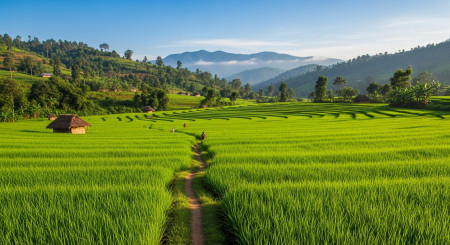
Yaounde is currently hosting a multi-country training programme aimed at doubling Africa’s rice output to 56 million tonnes by 2030 and improving quality. This is in a bid to reduce import dependence and strengthen food security. The workshop has brought together representatives from nine African countries under the Coalition for African Rice Development (CARD) and focused on a value chain approach to rice production, from seed selection to marketing.
The initiative is being implemented through the Project for the Development of Irrigated and Rainfed Rice Farming by Reinforcing the Value Chain (PRODERIP-RCV), with support from the Japan International Cooperation Agency (JICA), and was opened by the Secretary General of the Ministry of Agriculture and Rural Development, Prof Bambot Grace Annih.
Opening the workshop on behalf of Cameroon’s Minister of Agriculture, Prof Bambot Grace Annih, said low competitiveness in the productive system continues to weigh on rice output across the sub-region. She cited limited availability of high-quality plant material, low levels of mechanisation, inadequate rural infrastructure, post-harvest losses, climate variability and insufficient financing as key constraints.
“Improving living conditions and ensuring food security requires the development of an efficient agricultural and rural sector,” she said, noting that rice remains a strategic staple for urban and rural households.
Recent data underline the economic stakes. The Food and Agriculture Organisation (FAO) estimates that Africa imported more than 17 million tonnes of rice in 2023, spending over US$8 billion annually to meet domestic demand, with Central and West Africa among the most import-dependent regions. FAO statistics show that average rice yields in sub-Saharan Africa remain below 2.5 tonnes per hectare, compared with a global average of about 4.7 tonnes per hectare, highlighting productivity gaps that value chain interventions seek to address.
CARD coordinator Reginald Ze-Nkpwang recalled that the initiative was launched in 2008 at the Tokyo International Conference on African Development by JICA in partnership with the Alliance for a Green Revolution in Africa and the New Partnership for Africa’s Development. During its first phase from 2008 to 2018, CARD supported member states in developing and implementing National Rice Development Strategies and strengthening capacity across the value chain. As a result, 218 projects were formulated, and Africa’s rice production reached about 30.1 million tonnes in 2017, according to the CARD programme data.
From Training to Output Growth
The second phase of CARD, covering 2019 to 2030, aims to double Africa’s rice production from about 28 million tonnes to 56 million tonnes by the end of the decade. JICA officials at the Yaoundé meeting said the current training would help narrow the gap between domestic production and consumption in Central Africa. The outgoing JICA Resident Representative to Cameroon, Kageyama Tadashi, said the programme would help reduce deficits and strengthen technical capacity. At the same time, the Japanese Embassy’s Deputy Chief of Mission, Uehara Kenya, expressed confidence that participating countries would apply the knowledge to transform their agriculture sectors.
Country-level figures highlight the scale of reliance on imports. Officials from Congo Brazzaville said the country currently produces around 2,000 tonnes of rice annually but imports approximately 80,000 tonnes each year to meet demand, a pattern mirrored across much of Central Africa. According to FAO Rice Market Monitor data published in 2024, Africa’s rice consumption continues to rise by more than 3% annually, driven by population growth and urbanisation. Organisers of the Yaounde workshop said the training is designed to equip stakeholders with practical tools to improve yields, quality, and market access, and to align national strategies with CARD’s continent-wide production targets.
Participating countries include Mauritania, Benin, Burundi, Chad, Gabon, Congo Brazzaville, the Democratic Republic of Congo, the Central African Republic and Cameroon. Sessions cover assessment of rice cultivation systems, quality standards, seed production and purification, mechanisation for land preparation and water management, post-harvest handling, packaging and marketing. According to MINADER officials, the programme also aims to harmonise support to the 32 CARD member states and improve the business environment to attract investment into rice farming and processing.
Mercy Fosoh

