





















Cameroon’s electricity purchases from independent power producers (IPPs) rose sharply in 2024, reaching CFA156.133 billion, according to sector data released by the Electricity Sector Regulatory Agency (Arsel). The 17% increase from 2023 further strengthens the weight of energy purchases in the sector’s cost structure, at a time when the generation mix is evolving.
The higher bill is explained less by growth in consumption volumes than by the inclusion of new cost components in the tariff structure. Transmission charges billed by DPDC, KPDC, and NHPC, as well as water royalties payable to NHPC, are now recorded as energy purchases. This change in scope has directly pushed up the reported expenditure and makes year-on-year comparisons at constant volumes more complex.
Electricity demand continues to rise
On the operational side, 7,933,002 MWh were injected into the distribution network in 2024, up from 7,558,058 MWh a year earlier, an increase of 5%. The trend confirms steadily rising national electricity demand, driven in part by the expansion of the industrial base, which mechanically increases the need to secure supply.
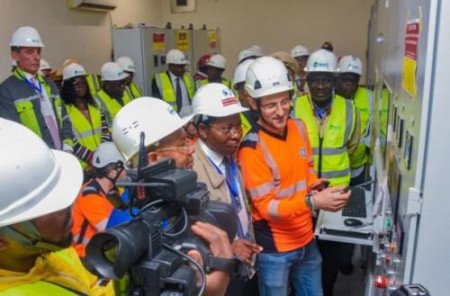
The year was also marked by the partial commissioning of the Nachtigal hydroelectric dam. The plant accounted for 10% of electricity injected into the system during the period, quickly establishing itself as a major contributor in its first year of operation. Its entry has altered the supply structure by increasing the share of hydropower, which is presented as less costly.
The arrival of Nachtigal—one of the country’s largest hydro projects—has reshuffled contributions among producers. Output from some IPPs, notably KPDC and EDC, declined compared with 2023: KPDC’s share fell from 15% to 12%, while EDC dropped from 14% to 9%. In theory, the rise of hydropower reduces reliance on thermal plants; in practice, the transition depends on the pace at which new capacity ramps up.
This dynamic did not prevent a sharp increase in fuel costs. These reached CFA64.507 billion in 2024, up from CFA41.648 billion a year earlier. Delays in the full commissioning of Nachtigal forced the system to rely more heavily on thermal plants to secure supply to the Southern Interconnected Grid, highlighting the sensitivity of costs to industrial timelines.
Amina Malloum

