






















- Cameroon’s post-election violence caused CFA254.6 billion ($420 million) in losses to companies and tax revenues.
- Businesses absorbed CFA211.4 billion in losses, while the state lost CFA43.3 billion in tax revenue.
- Douala accounted for nearly 65% of total losses, according to employers’ group Gecam.
Post-election violence following Cameroon’s Oct. 12, 2025 presidential election inflicted total losses of CFA254.6 billion on the national economy, according to a survey report published by the Groupement des entreprises du Cameroun.
The employers’ association said the losses affected both private companies and the tax administration, reflecting the scale of the economic disruption caused by the unrest.
Gecam estimated corporate losses at CFA211.4 billion, equivalent to about 0.6% of Cameroon’s 2025 gross domestic product. The group said CFA202.3 billion of that amount stemmed from a “33.5% average contraction in turnover” during the crisis. Companies also suffered CFA9.1 billion in material damage from theft, destruction and fires, according to the report.
The decline in business activity weighed directly on public finances. Gecam said the state recorded an immediate fiscal shortfall of CFA43.3 billion, driven mainly by lower value-added tax receipts and reduced corporate income tax payments. “Public finances were also affected,” the report said.
Douala, Epicenter of the Crisis
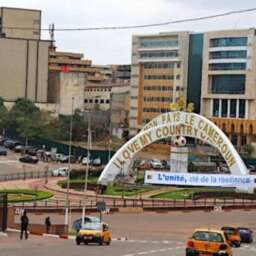
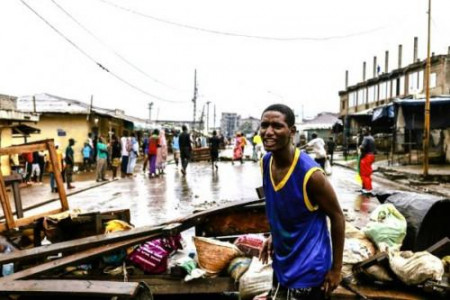
Gecam said post-election protests intensified across several regions, including the Littoral, North, Adamawa, Far North, South-West, West and East. However, Douala accounted for nearly 65% of total losses. Cameroon’s economic capital alone registered an estimated CFA160.3 billion in lost revenue, according to the employers’ assessment.
According to Gecam, three sectors bore the brunt of the October 2025 crisis. Hotels and restaurants recorded 53.4% of sectoral losses. Construction followed with 44.6%, while industry and energy posted losses of 39.8%.
Beyond financial and material damage, the crisis triggered wider economic disruptions. Gecam reported logistical blockages that affected agriculture at 86% and industry at 74%. Companies also faced sharp inflationary pressures, with an average inflation rate of 20.1% reported by firms and peaks of 32.5% in agriculture. The group said 75% of companies experienced complete shutdowns, alongside cash-flow stress, workforce reductions and a deterioration in workplace social conditions.
Employers Call for Recovery Measures
To recover from what it described as “a post-election crisis of unprecedented magnitude in Cameroon,” Gecam urged the government to implement measures deemed “priority” by business leaders. These include targeted tax relief, a moratorium on audits and deferred payment deadlines to ease liquidity pressure. The group also called for financing mechanisms combining subsidies and credit lines, with a focus on very small enterprises, the rehabilitation of damaged production facilities, stronger security in economic zones, and a temporary suspension of road checkpoints along key trade corridors to restore the flow of goods.
To support the credibility of its findings, Gecam said it conducted surveys between Nov. 6 and Dec. 2, 2025 among 289 companies and 11 professional organizations. The respondents generated combined annual turnover of CFA4,825 billion. “The high concentration of respondents in Douala (78%), the epicenter of the crisis, ensures excellent coverage of the zone representing nearly 67% of national turnover,” the employers’ group said.
This article was initially published in French by Brice R. Mbodiam
Adapted in English by Ange Jason Quenum

