

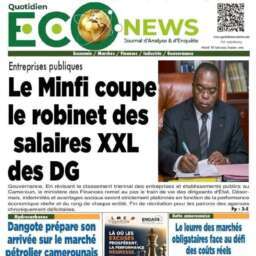














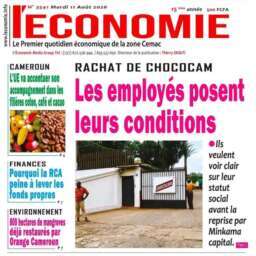









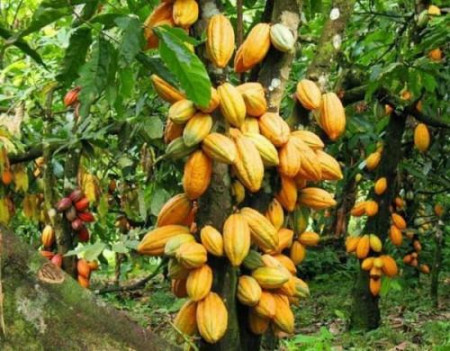
Cameroon says it is ready and continuing to prepare to comply with the European Union Regulation on Deforestation and Forest Degradation (EUDR), which requires cocoa sold in the EU to meet seven legal conditions, including proof that it is not linked to deforestation.
Agriculture and Rural Development Minister Gabriel Mbaïrobe said the country is fully committed to zero deforestation in cocoa production. He said seven ministries have signed onto this commitment. The minister was speaking on December 16 in Yaoundé at the official presentation of a guidance manual on due diligence for cocoa legality under the EUDR framework.
Raising output without expanding farmland
According to the minister, Cameroon’s confidence is based on its ability to apply the EU regulation using existing resources and tools. He pointed to a cocoa orchard covering about 650,000 hectares and said productivity gains could significantly increase output without expanding cultivated land.
He said regeneration techniques, densification, and quality improvement alone could triple production on existing farms. Current cocoa yields in Cameroon stand at around 450 to 500 kg per hectare.
The government also highlighted productivity gains through agricultural research. The minister said new cocoa varieties developed through research could deliver yields of between 1.5 tons and 2 tons per hectare. The underlying objective is to secure continued access to the European market while limiting pressure on forest areas.
Savanna cocoa and landscape restoration
Cameroon is also promoting the development of so-called savanna cocoa. According to the minister, cocoa is performing well in areas such as Mayo-Banyo and Mbéré in the Adamawa region, as well as in northern parts of the Noun department.
Another approach involves restoring degraded landscapes in partnership with development actors. The minister said that where regulations allow certain forest areas to be declassified, cocoa could be cultivated after restoration work is carried out. This strategy is intended to reconcile production goals with environmental requirements, subject to the applicable regulatory framework.
Seven legal requirements
Under the EUDR, cocoa placed on the EU market must comply with seven legal requirements: respect for land-use rights, environmental protection, respect for third-party rights, labor rights, internationally protected human rights, the principle of free, prior, and informed consent for Indigenous peoples’ rights, and compliance with tax, anti-corruption, trade, and customs regulations.
Cameroon says it has been training cocoa sector stakeholders on these requirements for several years. This process led to the development of a due diligence guidance manual on cocoa legality for the EU market. Due diligence is presented as a continuous process to identify, assess, and mitigate risks linked to supply activities, with specific precautions to be applied by operators for each shipment under the EUDR.
Originally scheduled to take effect on January 1, 2026, the EU regulation could now enter into force on January 1, 2027.
Ludovic Amara

