





















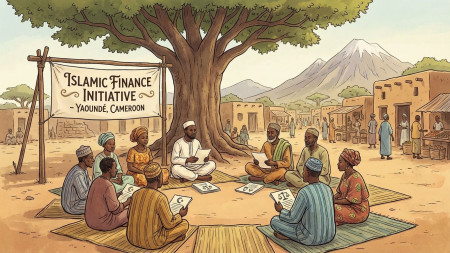
Cameroon has officially transitioned its Islamic finance ambitions from a theoretical regulatory framework to an operational reality. On December 22 in Yaoundé, the Ministry of Finance (MINFI) launched a high-profile national campaign to activate the sector, bringing together heavyweights like the Bank of Central African States (BEAC) and the banking commission (COBAC). While the immediate government messaging focuses on financial inclusion—specifically bringing the country’s vast informal economy into the formal banking fold—strategic observers will recognise this as the first move in a much larger play to diversify capital.
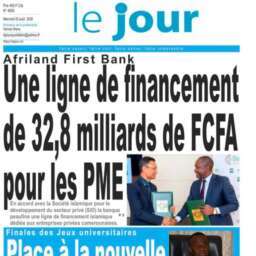
The “Islamic Window” model defines the current landscape. Rather than establishing standalone Islamic banks, which require significant capital expenditure, Cameroon is leveraging existing conventional heavyweights. Institutions such as Afriland First Bank and the Commercial Bank of Cameroon (CBC) are currently the primary authorised operators, now backed by the legal certainty of CEMAC Regulation No. 04/22, adopted in late 2022.
To signal its commitment, the government has earmarked approximately FCFA 3 billion (US$4.8m) in credit lines through 2027. While this sum is macro-economically modest, it serves a critical function as a state guarantee, signalling to the market that the government is willing to underwrite the initial risks of sector development.
However, the actual value of this initiative likely lies beyond small-business loans. By normalising Sharia-compliant transactions now, Yaoundé is effectively laying the groundwork for a future sovereign Sukuk (Islamic bond) market. Cameroon faces a persistent infrastructure funding gap, and traditional Eurobond markets are becoming increasingly expensive due to global interest rates.
The Islamic capital market offers a vital alternative source of liquidity, particularly from Gulf investors. For a nation to successfully issue a sovereign Sukuk, it first requires a functional domestic ecosystem capable of managing these complex flows. This awareness campaign, therefore, is not just about retail banking; it is about building the absorption capacity necessary for significant state financing down the road.
Despite this potential, the sector faces significant structural friction, primarily regarding taxation. Unlike conventional loans, Islamic finance is asset-backed and often involves multiple transfers of ownership—such as a bank buying a machine and reselling it to a client. Under standard tax codes, this can attract double taxation, rendering the products uncompetitive.
The success of this new campaign will depend less on the marketing at the Hilton Hotel and more on whether the Ministry of Finance can rapidly implement specific fiscal neutrality measures. If these tax hurdles are cleared, Cameroon’s move to embrace Islamic finance could evolve from a niche inclusion project into a central pillar of its national infrastructure funding strategy.
Mercy Fosoh, Edited by Idriss Linge

