






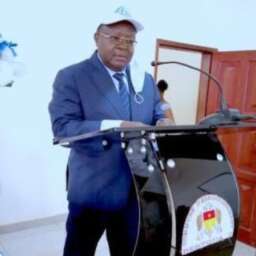










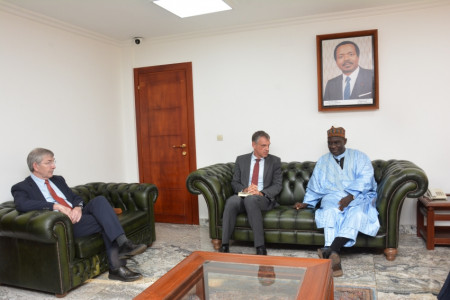
Cameroon and Germany have confirmed a shared commitment to deepen and expand bilateral economic cooperation, with a particular focus on increasing German private-sector participation in Cameroon’s economy. This declaration followed a formal meeting on 19 December 2025 between Cameroon’s Minister of Economy, Planning and Territorial Development, Alamine Ousmane Mey, and the newly accredited Ambassador of the Federal Republic of Germany to Cameroon, H.E. Christian Sedat, who took up his duties in July 2025. The discussions identified strategic areas for collaboration ahead of the 10th Yaounde International Business, SME and Partnership Fair (PROMOTE) scheduled for June 2026.
The meeting outlined priority areas in economic cooperation, foremost among them being the mobilisation of German enterprises to capitalise on commercial and investment opportunities in Cameroon. Ambassador Sedat emphasised the significance that Germany places on private-sector engagement at PROMOTE 2026, a key business and investment platform for Central Africa, which is expected to draw international and regional participants. The event is intended to support stronger business linkages and economic partnerships between Cameroonian and foreign firms, including those from Germany.
Discussions at the meeting also addressed broader aspects of Cameroon-Germany economic cooperation, including the promotion of the private sector and sustainable natural resource management. Participants also incorporated international climate concerns into their talks, reflecting outcomes from the COP30 climate conference, held 10-21 November 2025 in Belém, Brazil, which highlighted global initiatives on deforestation, climate change adaptation, and the transition to renewable energy sources.
Ambassador Sedat, who succeeded Dr Corinna Fricke as Germany’s envoy in Cameroon, brings extensive diplomatic experience from posts across Africa, Europe and the United States. Dr Fricke, who had served in Cameroon since 2020, completed her tenure earlier in 2025. Bilateral relations between the two countries extend beyond diplomacy. They are supported by longstanding cooperation programmes in governance, development and resource management, involving German development agencies such as GIZ and the KfW Development Bank. These programmes aim to strengthen local governance, resilience and economic inclusion in Cameroon’s communes and to support sustainable land and forest management initiatives.
Following the audience, the Ministry of Economy stated that the exchanges “made it possible to identify several structuring axes of cooperation for the coming years, notably the mobilisation of German companies around the economic opportunities offered by Cameroon,” with particular emphasis on promoting the private sector and sustainable resource management.
Recent trade figures highlight the strengthening of Cameroon-Germany economic relations. Data from the Observatory of Economic Complexity (OEC) show that in September 2025, Cameroon exported goods worth €32.6 million (approximately 21.4 billion FCFA) to Germany, while imports from Germany reached €18 million (around 11.8 billion FCFA), resulting in a positive trade balance of €14.6 million (9.6 billion FCFA) in Cameroon’s favour.
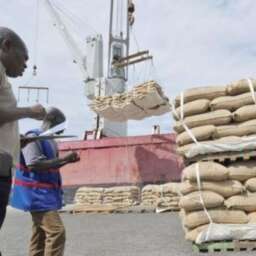
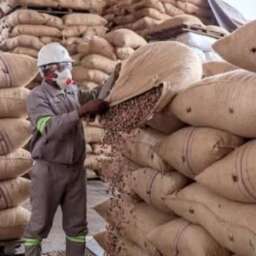
Compared with September 2024, exports rose by €8.24 million, a growth of 33.8%, while imports increased by €1.08 million, or 6.35%. Cocoa and cocoa products led Cameroon’s exports at €20.9 million, followed by petroleum oil and petroleum gases at €7.88 million, and tropical and subtropical fruits at €1.53 million. Imports from Germany were dominated by other machinery valued at €7.09 million, lifting and handling equipment at €1.36 million, and other chemical final products at €816,000.
The year-on-year growth in exports was driven primarily by petroleum oils and petroleum gases, which rose by €6.17 million, or 359%, alongside cocoa and cocoa products, which increased by €3.72 million, or 21.6%. Aluminium and aluminium alloys, including waste and scrap, also expanded by €674,000, representing a growth of about 1,300%. On the import side, the rise was primarily attributed to other machinery, up by €1.46 million or 25.9%; spirits, which grew by €590,000 or 908%; and articles of paper, which increased by €526,000, according to OEC figures.
Mercy Fosoh

