














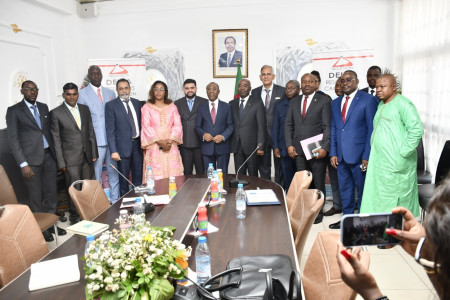
Cameroon’s Government has set a six-month production target for the Nkout Iron Project following an audience on 19 December with a consortium of international mining companies led by Delta Ressources Cameroon plc. The meeting, presided over by the interim Minister of Mines, Industry and Technological Development, Prof. Fuh Calitus Gentry, focused on restructuring the project to enable immediate production once the mining convention and exploitation permit are finalised.
The consortium includes globally recognised firms such as Fomento Resources, KIOCL Limited, and VPR Mining Infrastructure Pvt. Ltd, which plan to undertake local processing and value addition. During the audience, Delta Ressources confirmed it would fully finance the construction of a School of Mines, Geology and Petrochemistry in the South Region, aimed at training local technical staff and supporting the mining sector’s human capital development.
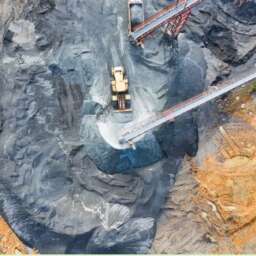
The Nkout Iron Project sits on an estimated 600 million tonnes of reserves and 22 million tonnes of direct shipping ore (DSO), with potential to extend to one billion tonnes. The project is expected to operate for a minimum of 50 years, providing long-term economic benefits to the South Region and creating employment opportunities for local communities. The government has also announced the launch of a pre-selection campaign for young graduates who will receive scholarships and may be recruited for mining operations.
According to the ministry of mines, representatives from the consortium, government officials, and local authorities conducted a field visit on 18 December to identify key sites for development. This initiative forms part of the government’s strategy to prioritise mining projects, with seven of the 15 nationally identified priority projects located in the South Region.
Cameroon’s mining sector currently contributes less than 1 per cent to national GDP, despite hosting significant mineral reserves including iron ore, bauxite, gold, cobalt, and nickel. According to World Bank data, the sector accounts for roughly 0.2-0.6 per cent of GDP and less than 0.2 per cent of government revenues, highlighting the potential impact of large-scale projects such as Nkout.
The Nkout Iron Project forms part of Cameroon’s broader strategy to expand its mining sector and increase its contribution to national economic growth. With significant reserves and a minimum operational life of 50 years, the project is expected to generate long-term employment, develop local technical expertise, and attract further foreign investment. The initiative positions the South Region as a key hub for industrial and mineral development, aligning with government priorities to modernise and industrialise Cameroon’s economy.
Mercy Fosoh

