

























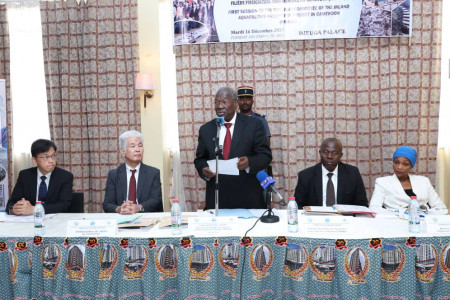
Cameroon has launched a new phase in the development of its inland aquaculture sector with the first steering committee meeting of the Project for the Promotion of Inland Fish Farming (PROFIP), held recently in Yaounde under the chairmanship of the Minister of Livestock, Fisheries and Animal Industries, Dr Taiga. The Cameroon-Japan cooperation project will run for five years and aims to establish a modern, sustainable and income-generating fish farming industry in the Centre, Littoral, West and South regions, with a 2026 roadmap now under preparation.
The steering committee meeting focused on defining the project’s strategic orientations, adopting the draft work plan and budget, and setting guidelines for the programme’s technical and financial management. PROFIP will begin with a comprehensive assessment of the current state of inland fish farming in Cameroon, alongside efforts to strengthen the technical capacities of actors across the value chain. The project is being implemented with technical and financial support from the Japan International Cooperation Agency (JICA) and is scheduled to run until 2030.
Speaking during the meeting, Dr Taiga outlined the responsibilities assigned to the steering committee, which include validating project priorities and ensuring effective coordination. The minister noted that the project is being rolled out at a time when global crises have driven up the cost of raw materials, reinforcing the need to increase local production significantly. He stated that the committee’s work is central to achieving Profip’s objectives, particularly in boosting domestic supply and strengthening the resilience of the national food system.
According to Tadashi Kageyama, Resident Representative of JICA in Cameroon, Profip will be implemented in four regions — Centre, Littoral, West and South — and will benefit from sustained Japanese technical assistance. Seven Japanese experts are expected to be deployed to Cameroon during the implementation phase to provide specialised expertise in fish farming and aquaculture. The objective, he said, is to transfer know-how and support the country’s drive towards greater autonomy in the aquaculture sector.
The project aligns with Cameroon’s economic diversification and food security policies, as well as the objectives of the Integrated Agropastoral and Halieutic Import-Substitution Plan (PIISAH). The government has identified inland fish farming as a high-potential sector for inclusive growth under the National Development Strategy, NDS30.
The strategy seeks to promote sustainable aquaculture while reducing dependence on fish imports. In 2024, Cameroon consumed an estimated 480,000 tonnes of fish, of which 116,000 tonnes were imported at a cost of nearly FCFA 95 billion, according to the ministry. Through PROFIP, the government, via the Ministry of Livestock, Fisheries and Animal Industries, and with JICA’s support, aims to strengthen local production capacity and reduce the economic burden of fish imports.
Mercy Fosoh

