
























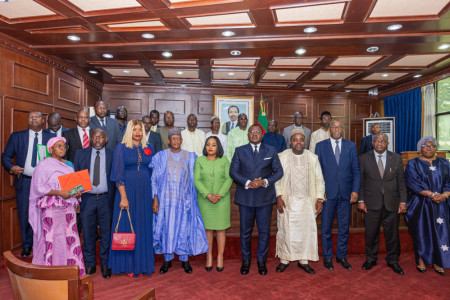
Cameroon’s rail sector is set to enter a primary investment phase from 2026, with plans confirmed for the renewal of 568 kilometres of railway track and the deployment of new rolling stock under the second Five-Year Railway Investment Programme (PQ2). The roadmap was reviewed recently in Yaounde during the 46th ordinary session of the Interministerial Committee for Railway Infrastructure (COMIFER), where officials assessed progress, noted delays in execution, and confirmed that procurement processes have been completed and cleared by development partners, paving the way for the start of works and equipment deliveries.
The launch of these contracts is scheduled for January 2026, allowing works to begin once the rails, sleepers, ballast, and expansion devices are delivered. On rolling stock, CAMRAIL has initiated the purchase of 12 locomotives, with four expected in the first quarter of 2026, four in 2027 and the final four in 2028, alongside 200 wagons already acquired to support freight and passenger operations.
According to Claude Misse Ntone, Director of Railway Transport at the Ministry of Transport, the preparatory phase is complete. “All the procurement processes have been finalised and have received the non-objection of the lenders. Their launch will take place in January 2026. Once the rails, expansion devices, sleepers and ballast are received, work will effectively begin on the ground,” he said. CAMRAIL’s Director General, Joël Hounsinnou, added that the staged delivery of locomotives and the existing wagon fleet would ensure continuity of service and support the complete execution of the five-year plan.
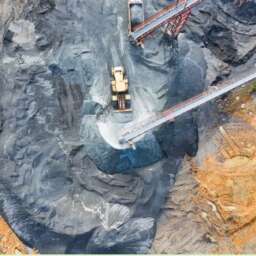
Beyond rehabilitation, COMIFER reviewed progress on strategic expansion projects with direct economic implications. These include steps towards the entry into force of the public-private partnership signed with the Bestway Finance-AustSino consortium for the Mbalam-Kribi railway, as well as ongoing discussions with Etihad Rail and the AGL-Camalco group for the Ngaoundéré-N’Djamena and Edéa-Kribi-Campo lines. These corridors are expected to strengthen freight flows, support the Port of Kribi and underpin the growth of the mining sector, notably the Minim Martap bauxite project, whose initial shipments are planned to transit on the existing network.
Institutional reforms were also highlighted as part of the investment framework. The 2023 law establishing a national rail asset management company and a railway regulation and safety authority is intended to improve governance and provide a stable environment for capital deployment. COMIFER called for accelerated financing mobilisation, stronger inter-institutional coordination and tighter technical monitoring to align rail infrastructure spending with rising passenger and mineral transport demand and broader economic development objectives.
Mercy Fosoh

