























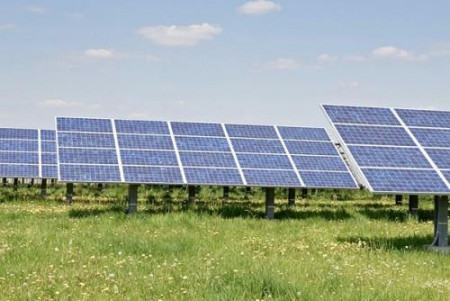
(Business in Cameroon) – The Cameroonian government is close to signing a contract authorizing GDS Orion Solar to build and operate a solar power plant in the city of Ngaoundéré, in the northern part of the country. “Technical studies have been completed and a draft power purchase agreement has been prepared. The Ministry of Finance has recently issued a favorable opinion on covering the project’s financial risks. Only final negotiations with the partner remain before the definitive signing of the contractual documents,” said Minister of Water and Energy Gaston Eloundou Essomba.
The minister made the remarks in late November 2025 before the National Assembly, while presenting his ministry’s 2026 budget to the finance committee. The signing with GDS Orion Solar is expected to unlock the effective implementation of the project, which was first announced seven years ago.
A project revived after seven years in development
The solar project was initially developed in 2018 by the French consortium Générale du Solaire–Arborescence Capital. In June 2019, GDS Orion Solar, the project company set up by the consortium, signed a CFA15 billion investment agreement with Cameroon’s Investment Promotion Agency to develop a 20 MWc solar power plant in Ngaoundéré.
Slow progress during the development phase delayed the start of construction, which is now contingent on the signing of the power purchase agreement and the completion of final contractual arrangements.
According to information presented by Minister Eloundou Essomba to the finance committee, the project has since been scaled up. Planned capacity has been increased to 30 MWc from the initial 20 MWc, and the design now includes a 20 MWh battery storage system. The plant will be built in the locality of Massiwol and overseen by the project company GDS Orion Solaire Ngaoundéré SAS.
The higher capacity and the addition of storage significantly change the technical profile of the project initially defined in the 2019 investment agreement, while keeping Ngaoundéré as the selected site.
Northern Cameroon as a solar energy hub
The project is expected to strengthen the role of solar power in Cameroon’s energy mix, which is still largely dominated by hydropower. Following the solar plants in Maroua and Guider—currently being expanded to reach a combined capacity of 64 MWc, up from an initial 30 MWc—the Ngaoundéré facility will further consolidate northern Cameroon as the country’s main hub for large-scale solar projects.
According to the Electricity Sector Regulatory Agency (Arsel), the three northern regions—Adamaoua, North, and Far North—record the highest solar irradiation levels in the country, with average solar exposure of about 5.8 kWh per square meter per day, compared with around 4 kWh per square meter per day in southern regions. This geographic advantage explains the concentration of major solar projects in the north, with the Ngaoundéré plant standing as the latest example.
BRM

