

























(Business in Cameroon) – The government plans to allocate CFA12.5 billion in 2026 to the Integrated Agropastoral and Fisheries Import-Substitution Plan (PIISAH). The amount represents a cut of about CFA2 billion compared with 2025, when PIISAH funding stood at CFA13.5 billion. According to budget documents, the reduction is expected to weigh on financing for small and medium-sized enterprises in the agropastoral and fisheries sectors through the SME Bank.
For 2026, CFA6.5 billion would be specifically earmarked to finance players across the fisheries value chain through the PIISAH window of the SME Bank. The document points to a drop of about CFA4 billion.
In 2025, the SME Bank received CFA9.2 billion for producers involved in the import-substitution plan. The decline in resources allocated to the PIISAH window could therefore translate into tighter financing capacity for affected operators, particularly in the fisheries sector.
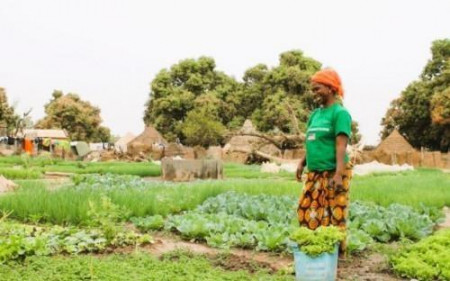
The Integrated Agropastoral and Fisheries Import-Substitution Plan (PIISAH) is a three-year program covering 2024–2026. According to the government, it aims to “reduce the trade balance deficit by substituting imported food products with abundant, high-quality local production driven by the private sector.”
Estimated at CFA1,500 billion to be mobilized gradually through ordinary domestic resources and external financing, PIISAH is built around three pillars: securing 400,000 hectares of land in the Central Plain and developing 160,000 hectares of agricultural and fisheries areas, alongside opening up production basins; improving production, processing, and marketing of food products; and scaling up research results while improving access to training and financing for sector players.
Ludovic Amara

